What happened
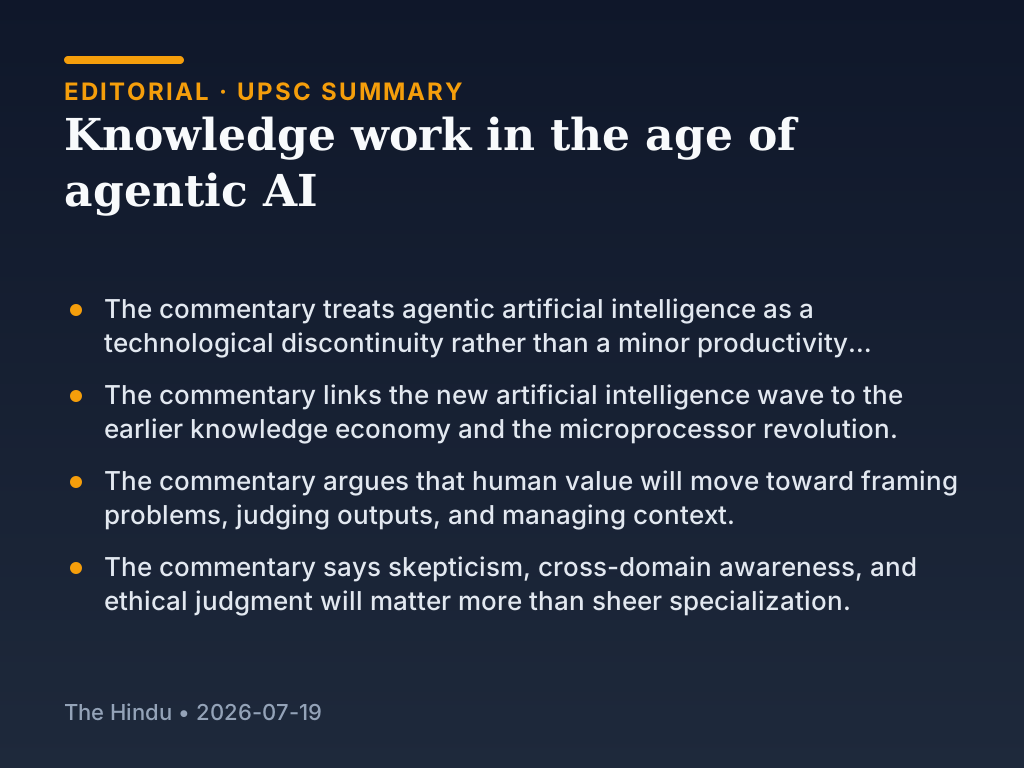
The Hindu commentary argues that agentic artificial intelligence marks a major technological discontinuity in the same broad way that the microprocessor revolution changed work. The central claim is that artificial intelligence is moving beyond assistance and toward systems that can pursue goals, sequence tasks, and operate independently for long stretches.
Why the author sees a shift in knowledge work
The commentary says the earlier knowledge economy rewarded workers who could manage information and make judgment calls. The new artificial intelligence wave, according to the author, reduces the premium on narrow technical execution and raises the value of framing the right problem, reading context across domains, judging outputs, and stopping an agent when its output looks wrong.
What the workforce will need
Related current affairs
- Knowledge work in the age of agentic AI
- Jitin Prasada holds bilateral meetings in Morocco on trade, investment and digital transformation
- What changes when AI moves from reading viral genomes to designing them?
- Google’s AI advantage faces its biggest test yet
- AI speech recognition model trained on 65 Indian languages and dialects released
- Parliament Question: Government schemes and missions for Artificial Intelligence, Research and Innovation