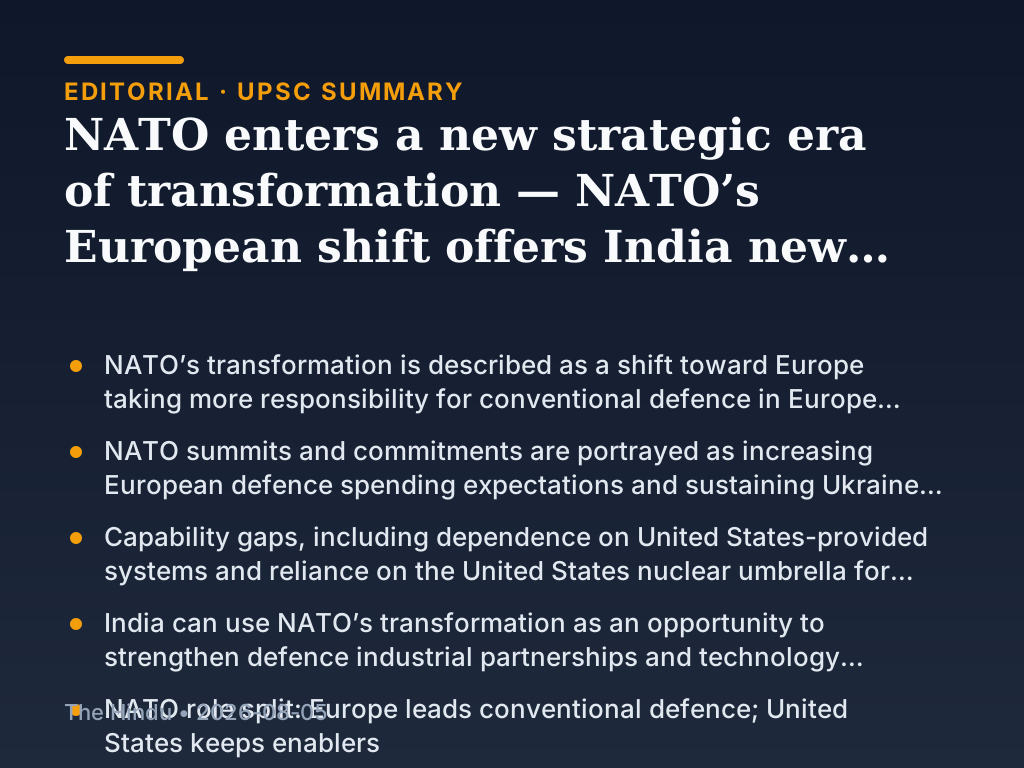
What happened: NATO and the United States shift toward greater European conventional defence responsibility
NATO members in Europe are expected to take more responsibility for conventional defence in Europe, while the United States is expected to retain key enabling roles. The enabling roles highlighted here include nuclear deterrence support, intelligence support, and certain long-range capabilities.
The rebalancing is linked to United States troop posture and operational changes in Europe after the Ukraine invasion. NATO summits and alliance commitments are also described as strengthening expectations on European defence spending, sustaining Ukraine support, and moving toward European-led long-range precision strike capabilities.
Background and earlier position: NATO evolution is framed as “strategic redistribution”
The explanation also highlights that the central challenge is capability gaps, not only defence spending. Europe’s dependence on United States-provided systems and on the United States nuclear umbrella for extended deterrence is treated as a major constraint.
Related current affairs
- Towards a more European alliance
- BRIEFLY: Russian envoy summoned after missile lands on NATO ally; Algeria; Greece; India/other items
- US jets after missile landing in Poland? NATO scrambles jets after missile lands in Poland
- Russia-Ukraine war: Saudí unveils plan for maritime defense; Russian attacks kill 10; NATO scrambles jets after a missile lands in Poland
- U.S. begins review of force presence in Europe amid Trump ire on NATO
- Rajnath: Great Nicobar project will safeguard Indo-Pacific interests