What happened
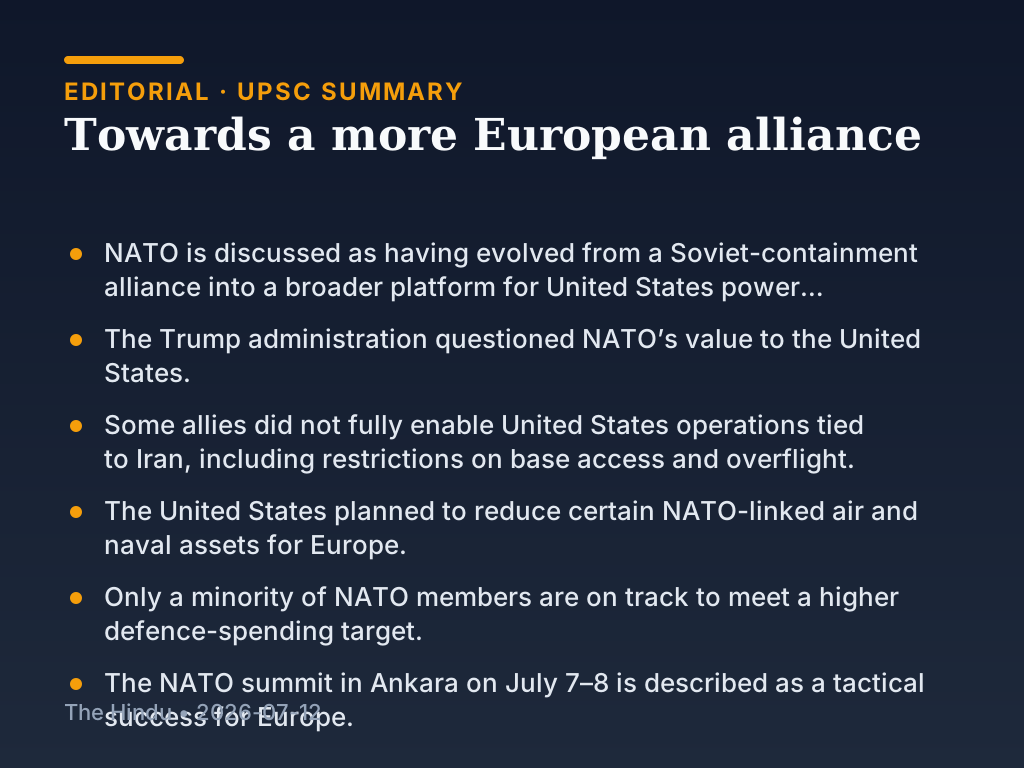
Donald Trump has argued that the United States supplies most of NATO’s resources and leadership while allies contribute less. The note also points to friction over operations linked to Iran, including allied refusal of base access and restrictions on aircraft overflight.
Reporting indicated that the United States planned to reduce certain NATO-linked air and naval assets for Europe. That raised European concerns about the reliability of collective defence under Article 5.
Background and earlier position
NATO was created as a collective-defence alliance, but decades of United States military operations made Europe dependent on American bases, logistics, and support. That history weakens any simple claim that NATO has only been a one-way arrangement.
Related current affairs
- NATO enters a new strategic era of transformation — NATO’s European shift offers India new strategic and defence opportunities
- Russia-Ukraine war: Saudí unveils plan for maritime defense; Russian attacks kill 10; NATO scrambles jets after a missile lands in Poland
- Warning signals for India from NATO’s Ankara summit
- Russia warns the U.S. against ‘unacceptable’ arms sales to Ukraine
- Tehran using Hormuz as leverage, other nations must step up: Rubio
- Russian drones kill 14 people at a mall in a central Ukrainian city