What happened (student protests linked to jobs and education delivery)
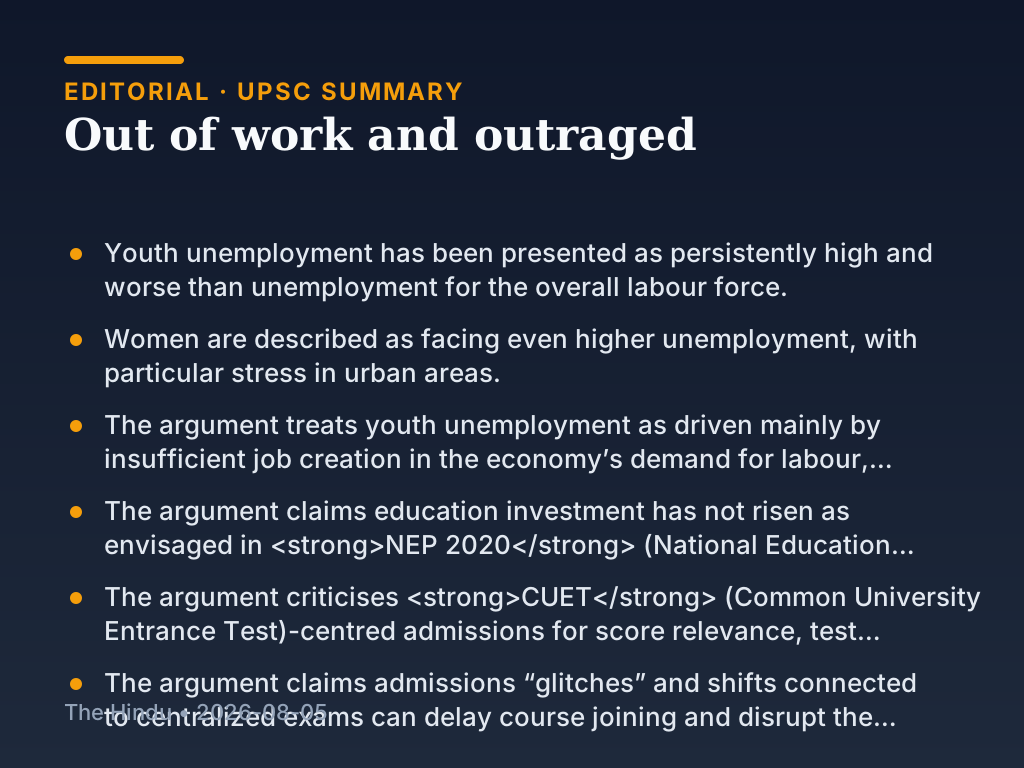
Student protests have been described as responding not only to exam and paper leaks but also to a wider sense that government delivery on jobs and education is failing. The argument links youth disillusionment to persistently high youth unemployment and to education systems that do not smoothly translate into timely employment opportunities.
The argument highlights gendered labour-market effects. It states that women face even higher unemployment, especially in urban areas, and it treats unemployment as driven more by insufficient job creation than by a shortage of educated workers.
Background and earlier position (NEP 2020 implementation, education funding, CUET-based admissions)
The argument ties the loss of a demographic dividend—often understood as the economic advantage from a large working-age population—to persistently high youth unemployment, describing youth joblessness as worse than overall labour-force unemployment.
The argument links unemployment to a “crisis in education” using an implementation and financing lens. It claims investment in education has not risen as envisaged under NEP 2020 (National Education Policy 2020), and it states that education’s share in government spending has been falling for more than a decade. It presents education underfunding as a supply bottleneck, where education access and seats do not keep pace with a growing number of applicants.
Related current affairs
- An education system’s collapse, young India’s trauma
- Contributors and attribution: V. Gopala Gowda / Maitreyi Krishnan / Gargi Sridharan / Basit Abdullah / V. Gopala Gowda
- The fact is youth unemployment has a household cost
- Why Morocco’s youth are risking their lives to move to Spain
- GenZ's parents have to answer for their crisis
- Amid Gen-Z protests, LJP MP moves Bill seeking Commission for Youth