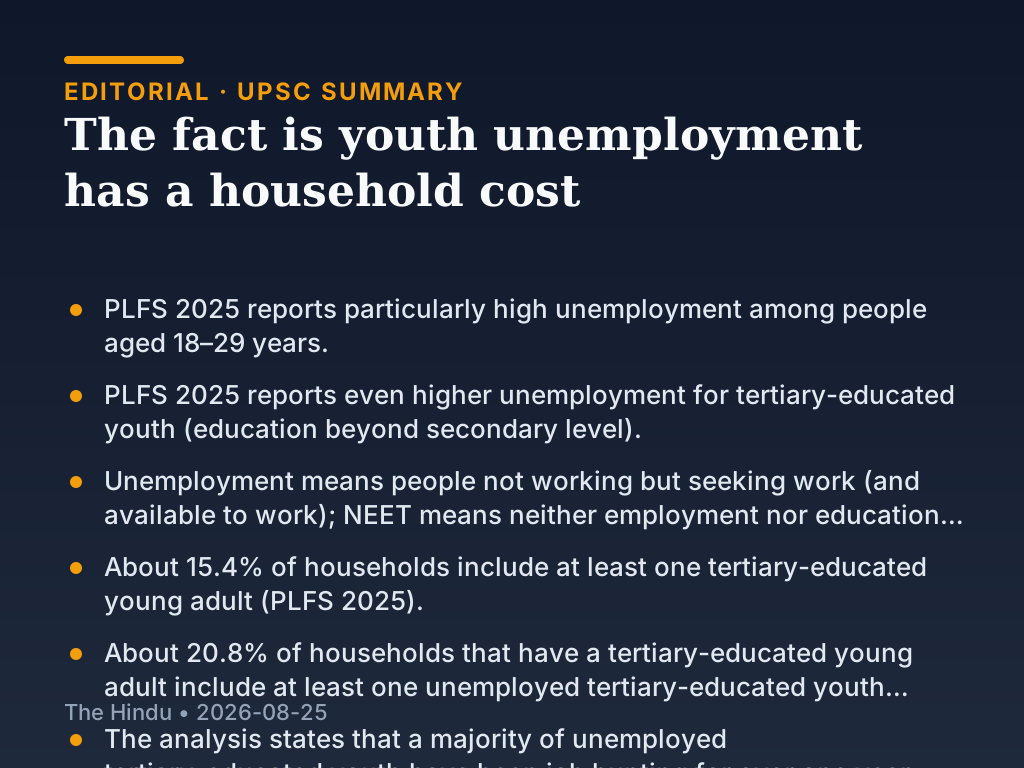
What happened: youth unemployment creates household financial stress
A The Hindu opinion piece argues that youth unemployment in India should be understood as both a labour-market problem and a household burden. The analysis uses Periodic Labour Force Survey (PLFS) 2025 estimates to connect youth joblessness with household consumption and earning impacts.
Youth unemployment is concentrated among young adults and tertiary-educated youth
The analysis highlights particularly high unemployment among people aged 18–29 years. It further states that unemployment is even higher for tertiary-educated youth (youth with education beyond secondary level).
The analysis distinguishes two related categories in simple terms:
Unemployment: people not working but seeking work (and available to work).NEET: people neither employed nor in education nor in training.
Related current affairs
- Contributors and attribution: V. Gopala Gowda / Maitreyi Krishnan / Gargi Sridharan / Basit Abdullah / V. Gopala Gowda
- MoSPI releases Monthly Bulletin for Periodic Labour Force Survey (PLFS) – July 2026
- Why Morocco’s youth are risking their lives to move to Spain
- PLFS Quarterly Bulletin (April–June 2026): Labour force participation, unemployment and employment structure
- GenZ's parents have to answer for their crisis
- Out of work and outraged