What happened: alleged “paper leak” crises create major disruption even when a conventional leaked printed paper is not established
High-stakes entrance and recruitment examinations in India have repeatedly faced crises linked to alleged “paper leaks” and other irregularities. The governance concern raised is that major consequences—such as cancellations, re-conducts, arrests, and loss of public confidence—have followed even when investigations reported no conclusive evidence of a conventional leaked printed question paper.
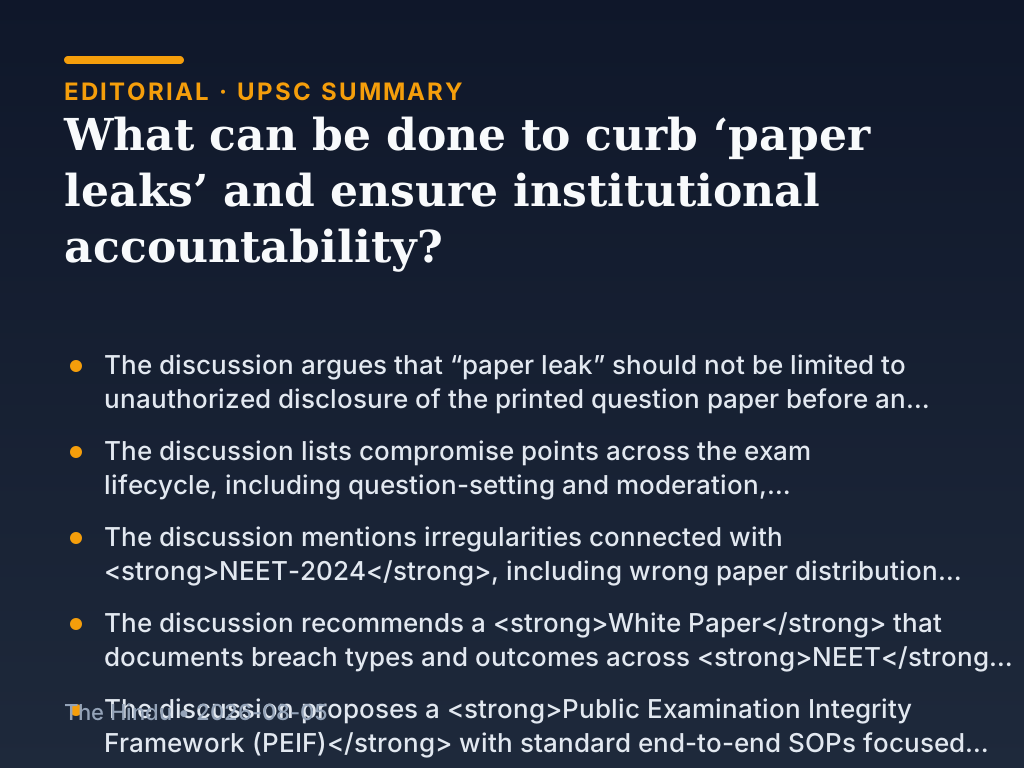
The discussion connects exam controversies with NEET and other examinations and highlights irregularities mentioned in the context of NEET-2024. The cited irregularities include wrong paper distribution followed by replacement, delays in OMR (Optical Mark Recognition) handling, exceptional grace marks, tie-breaking disputes, unusually high scores from specific examination centres and coaching hubs, and circulation of “guided papers”.
Background and earlier position: a narrow printed-paper definition can weaken accountability learning
A common administrative understanding treats “paper leak” as unauthorized disclosure of the printed question paper before the exam. The discussion argues that this narrow definition can limit accountability when compromise occurs earlier in the process or through channels that do not leave a recovered leaked printed sheet.
The discussion explains that information compromise can occur across the exam lifecycle—starting from question-setting and moderation, extending to translation, digitisation, compilation, handling of confidential materials, and continuing through later operational steps.
Related current affairs
- LETTER TO THE EDITOR: Paper leak law
- Express Explained: What is the anti-paper leak Bill & how it may work
- Exam reforms: What the report after 2024 leak said
- At root of exam leaks, a problem of centralisation
- NTAs NEET director said he flagged foreign trafficking of students: CBI probe
- NTA’s NEET director said he flagged foreign trial for-treatment petitions; CBI probe