What happened (how “exam leaks” are explained as a system problem)
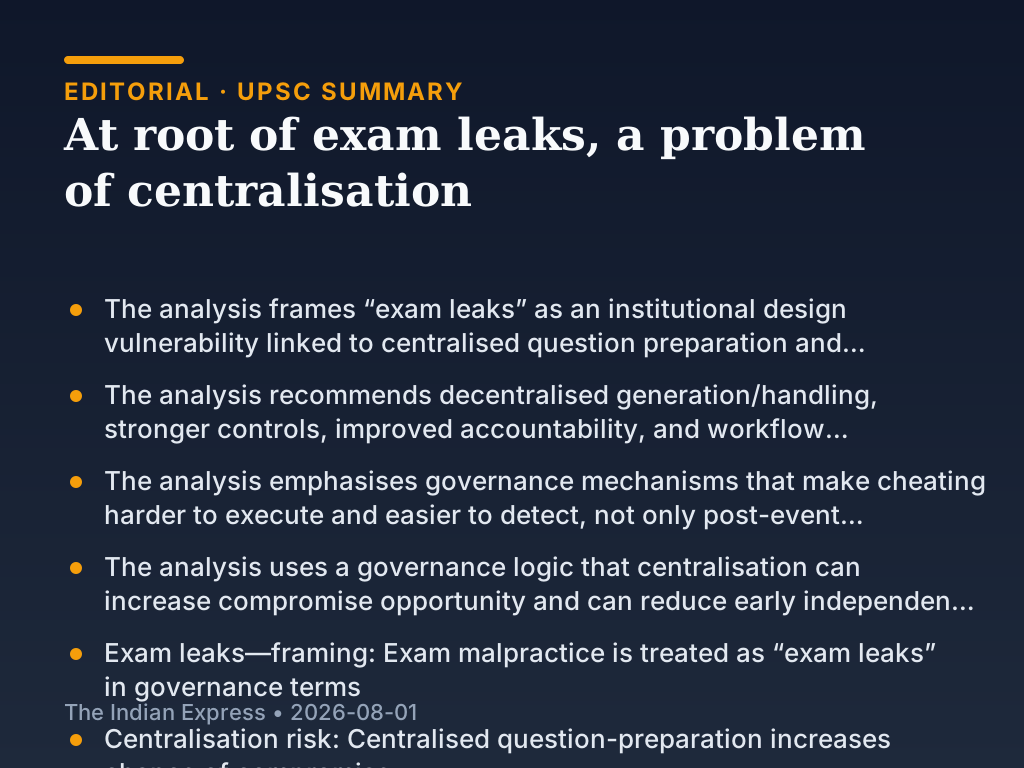
An opinion analysis connects examination malpractice often described as “exam leaks” to an integrity risk created by how examination processes are organised. The analysis argues that when question preparation and related handling steps are concentrated in limited central structures, it becomes easier for compromise to occur and harder to detect it early. The key point is that examination leakage can be treated as a governance design vulnerability, not only as individual wrongdoing.
Background and earlier position (why centralisation is described as risky)
The analysis advances a governance logic: centralisation can improve coordination, but it also concentrates sensitive access and information into fewer places. With fewer control points, the examination system may become more dependent on a limited set of safeguards and a narrow set of responsible actors. If the system focuses more on action after an exam than on prevention and early detection, harm to fairness and trust can become difficult to undo.
What changed now (the advocated shift in process design)
The analysis advocates structural changes aimed at reducing both the chance of leaks and the difficulty of detection. The recommended directions are: decentralised generation and handling processes for question material; stronger controls over access and process checkpoints; improved accountability across actors responsible for different stages; and workflow redesign to reduce single points of failure. The analysis also supports governance mechanisms that make cheating costlier and easier to detect, rather than relying mainly on punishment after wrongdoing.