What happened (core argument and analogy)
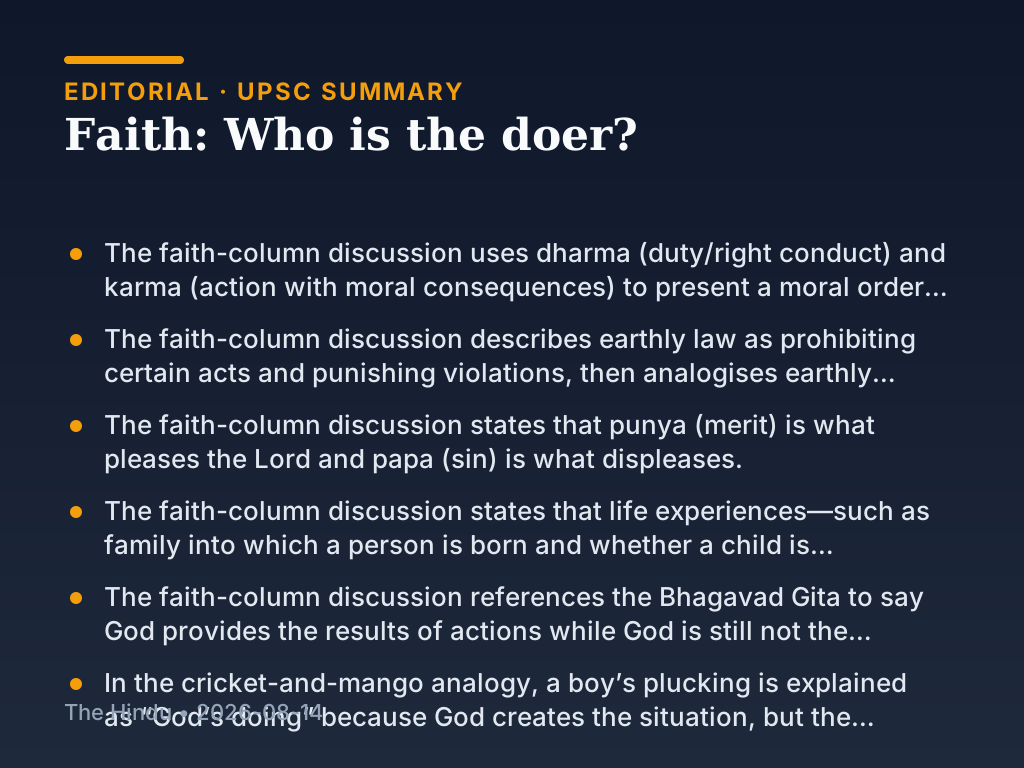
The Hindu presents a faith-column discussion on dharma (duty/right conduct) and karma (action with moral consequences) and asks what happens after good or bad deeds. The author frames a linked moral order: earthly law prohibits certain acts and punishes violations, and a Supreme One is described as having laid down rules and as watching human actions.
The faith-column discussion states that punya (merit) follows what pleases the Lord and papa (sin) follows what displeases the Lord. It also claims that life experiences, including the family into which a person is born and whether a child is healthy at birth, are shaped by past karma. The faith-column discussion references the Bhagavad Gita to say that God provides the results of actions while still not being the “doer” in the ultimate sense.
To explain how divine arrangement can coexist with human moral responsibility, the author uses a cricket-and-mango analogy. A group of boys plays cricket; the ball is hit into an uncared-for garden with a mango tree. One boy is sent to fetch the ball, sees mangoes within reach, and plucks one. The faith-column discussion explains the plucking as “God’s doing” in the sense that God creates the situation so the fruit of past deeds can be reaped, but the boy’s next action remains the boy’s decision. Sharing the mango is described as leading to further merit. Hurting nearby animals out of cruelty is described as willful wrong, which will be punished.
Background and earlier position (dharma/karma and rule-following logic)
The faith-column discussion builds a moral explanation using two related ideas found in Indian ethical and religious thought. Dharma is treated as right conduct (what one should do), and karma is treated as the moral cause-and-effect linking actions to outcomes. The discussion also uses human law as a familiar analogy: legal systems forbid acts, penalize violations, and thereby enforce a kind of moral order through rules.
Related current affairs
- What the C T A (or university “system”) says about ethics and the age of laws (byline not fully legible)
- If I forgive you, would you abuse?
- PM: Forgive children who abused me, let’s show them we’re human
- Urgent whim of duty: [Likely about a public responsibility/servicing theme]
- Anna Hazare to Sonam Wangchuk, a tale of facts, and those facts that get adjusted
- The cockroach toolkit gang