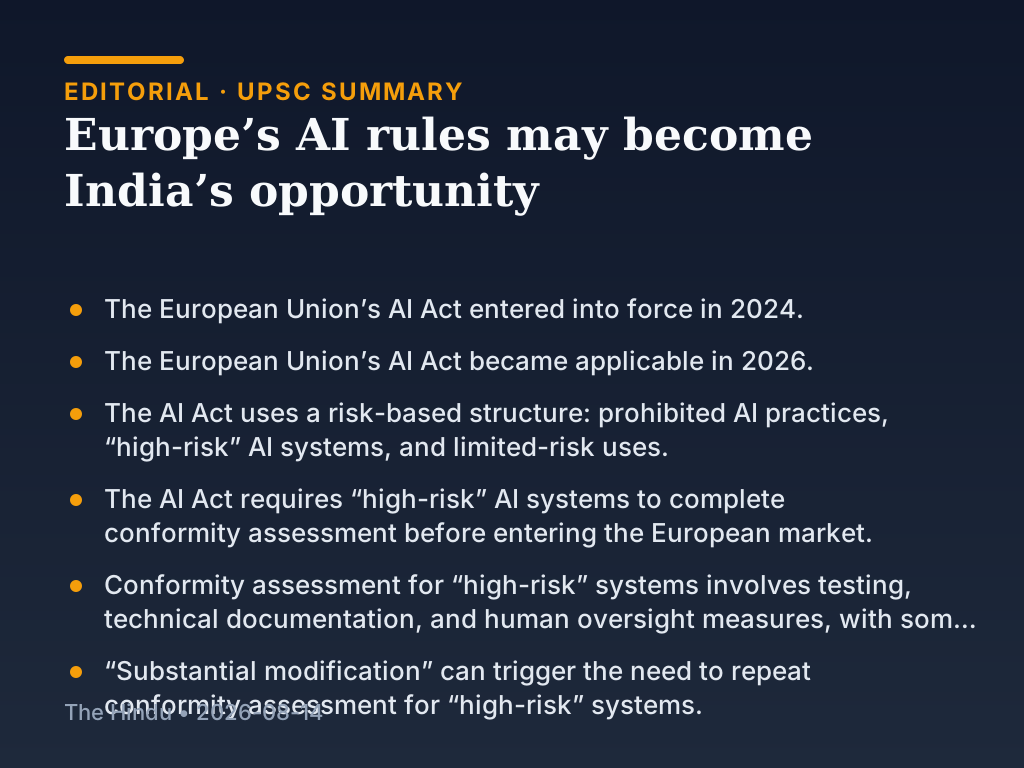
The European Union’s AI Act entered into force in 2024 and became applicable in 2026, creating conformity-assessment and post-approval compliance obligations that India can potentially support through legal and technical services.
GS2GS3EssayThe HinduGS2EU AI ActAI regulation and risk-based complianceConformity assessment
What happened
The European Union’s AI Act introduced a risk-based compliance framework for AI systems placed on the European market. The AI Act entered into force in 2024 and became applicable in 2026, making practical compliance duties central for AI providers selling into the EU.
The AI Act categorises AI uses into prohibited practices, “high-risk” AI systems with stricter requirements, and limited-risk uses with lighter checks.
Background and earlier position
India has indicated it may consider a standalone AI legislation approach. The EU AI Act also operates on the assumption that AI software is placed on the market with a defined intended purpose and a compliance scope at the time of conformity assessment.
A compliance trigger under the AI Act is “substantial modification”. The AI Act distinguishes between changes that were not planned during the original conformity assessment and upgrades that were foreseeable and covered in the original assessment scope.