What happened: the need for structured, amendment-ready legal publishing
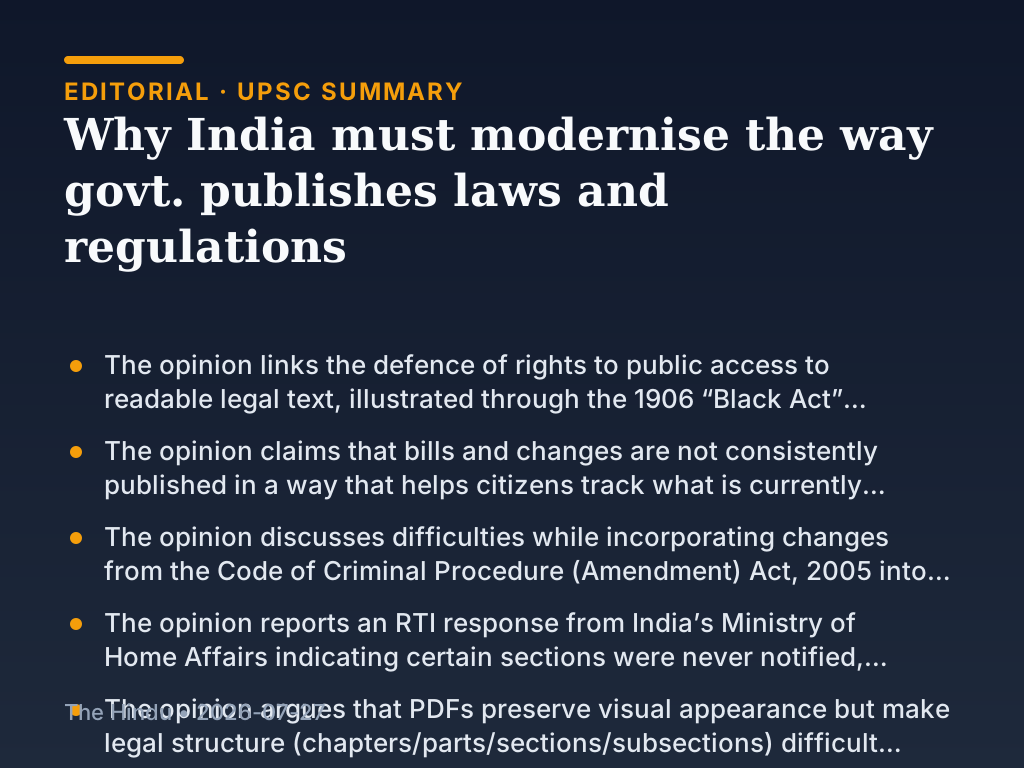
Sushant Sinha’s opinion in The Hindu argues that India’s legal publishing system needs modernization because it is fragmented and difficult to navigate. The opinion links rights and rule of law to one practical requirement: people must be able to read the law as it exists, including which amendments are currently in force.
Background and earlier position: legal text access has gaps
The opinion recalls an early example of the “public must be able to understand what law does to them” principle, using the 1906 “Black Act” against Indians in South Africa. The opinion highlights Mahatma Gandhi’s initial response: translation and publication of the ordinance so affected people could understand what was being done to them.
From the governance angle, the opinion argues that modern administration depends on citizens and institutions knowing the law correctly—especially which amendments apply on a specific date. In practice, the opinion claims that bills and legal changes are not consistently published in a way that helps citizens track what is valid law at present. The opinion describes experience from work as a legal publisher trying to incorporate changes from the Code of Criminal Procedure (Amendment) Act, 2005 into the principal act.
The opinion says the legal publisher searched government gazettes for notifications that bring particular sections into force. The opinion reports that gazette notifications could not be found for several sections. It further claims that a response under the Right to Information (RTI) from the Ministry of Home Affairs reportedly indicated that those sections had never been notified, implying they remained not valid law even after decades.
Related current affairs
- PMFBY digital and governance framework: NCIP, DigiClaim, land-record integration, CCE Agri app, CROPIC and grievance redressal
- A civilisational approach to social media
- SC committee pulls up Assam government for inaction over mining activity near Kaziranga
- Courts must speak language of rule of law, economics: CJI
- 7th BRICS ICT Working Group Meeting Continues in Pune on Digital Public Infrastructure and Digital Governance
- AI, Quantum, Cybersecurity and Digital Tools are rapidly transforming governance: Dr. Jitendra Singh