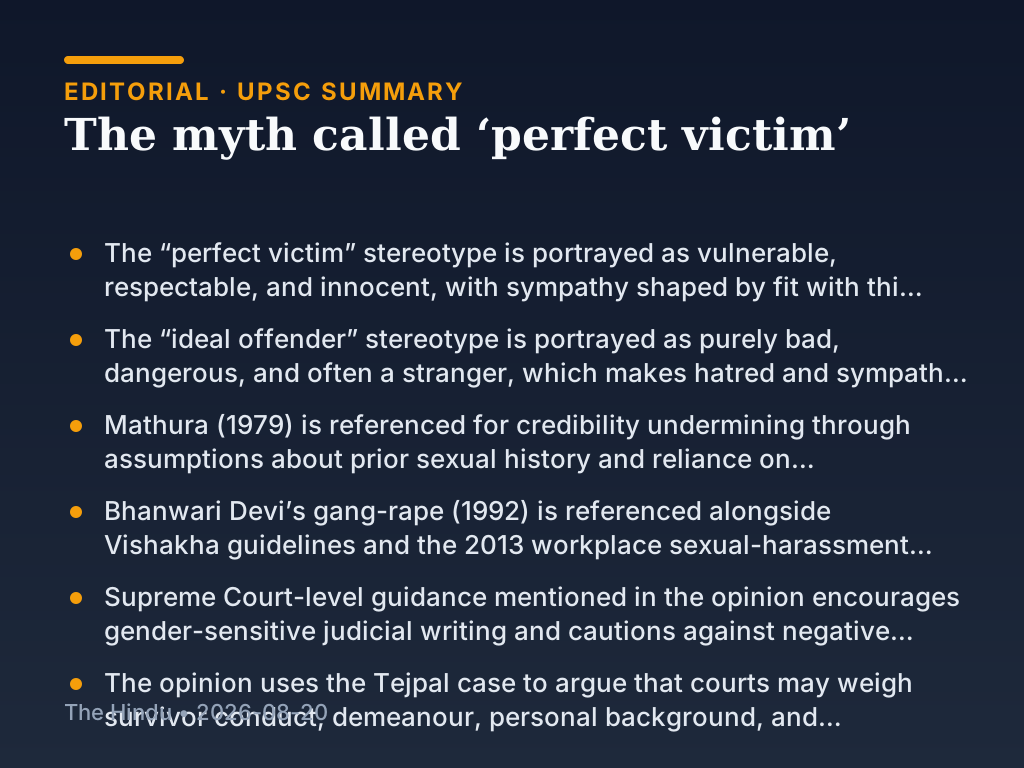
What happened: “perfect victim” stereotypes and credibility assessments
A The Hindu opinion article argues that sexual-violence trials can be shaped by a courtroom-driven stereotype of an “ideal/perfect victim.” The “perfect victim” is typically portrayed as vulnerable, respectable, and innocent, and sympathy for the complainant can be granted or withheld based on whether the survivor fits that template. The opinion argues that courts may struggle to treat the complainant as the sympathetic “ideal victim” when case facts do not match these stereotypes.
The opinion uses criminologist Nils Christie’s framework to explain the “ideal victim” versus “ideal offender” dynamic. In Christie’s framing, an “ideal offender” is constructed as purely bad, dangerous, and often a stranger. The opinion argues that the “ideal offender” frame can make sympathy and hatred easier to justify, which can narrow how judges interpret evidence and human behaviour in sexual-violence disputes.
Background and earlier position: how stereotypes enter legal reasoning
The opinion argues that courtroom stereotypes create an “ideal victim” and an “ideal offender” template. When courts rely on these templates, credibility checks can become stereotype-matching rather than careful evidence-based reasoning. The opinion argues that this can create a hierarchy of victimisation, where victims considered “undeserving” of sympathy receive less (or no) credence.
Case examples referenced in the opinion
Related current affairs
- Gist box
- THE GIST (polygamy explainer)
- How SC’s gender guide differs from the 2023 version
- NHRC takes suo motu cognizance of reported sexual harassment of girl students by a Principal in Moga, Punjab
- Kodagu hospital 'rape': After HC fines state, owner seeks quashing of chargesheet
- A law to give women farmers their due