What happened (legal issue at the centre)
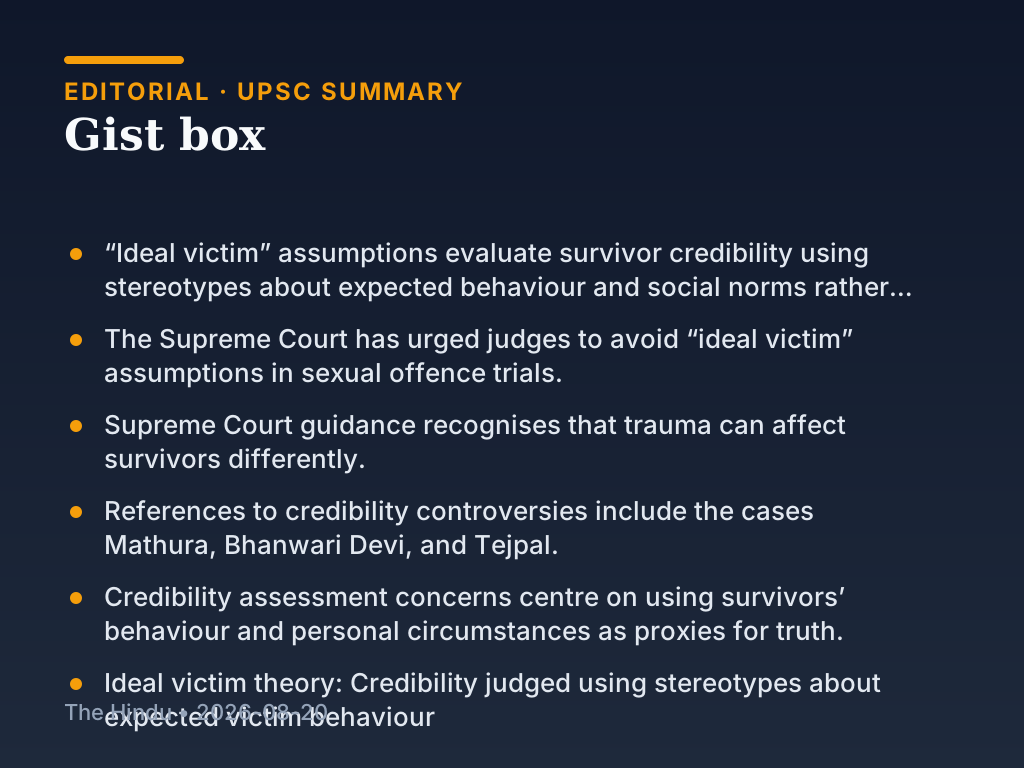
“Ideal victim” thinking in sexual offence cases means judging credibility based on stereotypes about how a survivor “should” have behaved. Courts may look at the survivor’s actions after the incident or the survivor’s personal circumstances and treat deviations as improbability of the allegation.
The Supreme Court has urged judges to avoid these assumptions, recognising that trauma can affect survivors differently.
Background and earlier position (how credibility was assessed in notable cases)
Earlier judicial reasoning in sexual offence cases sometimes relied on survivors’ behaviour patterns and personal circumstances to draw conclusions about credibility. The review includes references to cases including Mathura, Bhanwari Devi, and Tejpal, where credibility assessment faced controversy because it leaned on expectations linked to social norms rather than trauma-related realities.
Core concern in such assessments is not evidence itself, but the method of inference—how a court connects a survivor’s conduct to truthfulness without accounting for the effect of fear, shock, or psychological trauma.