What happened: enabling charges on UPI transactions through a law amendment
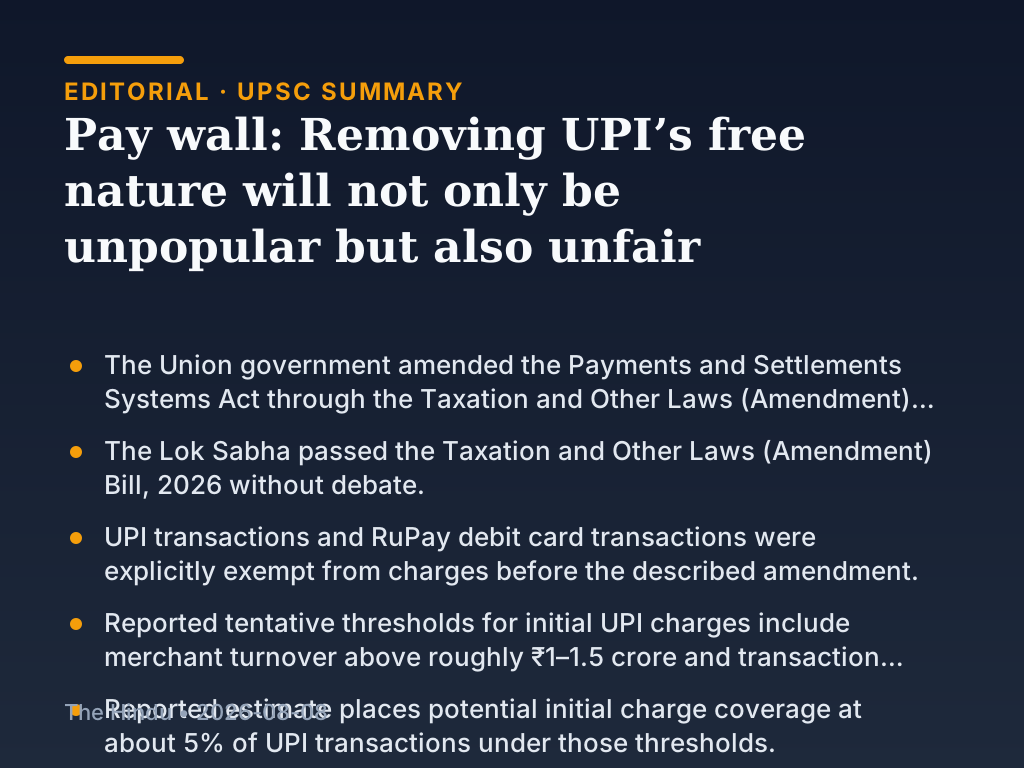
The Union government used the Taxation and Other Laws (Amendment) Bill, 2026 to amend the Payments and Settlements Systems Act. The Lok Sabha passed the Bill without debate, and the amendment creates legal flexibility for banks and payment processors to impose charges on UPI (Unified Payments Interface) transactions under later operational rules.
Background: UPI and RuPay debit card transactions were charge-exempt
Before the described amendment, UPI transactions and RuPay debit card transactions were explicitly exempt from charges. This charge-exempt approach supported rapid digital payments adoption by keeping user costs low.
What changed now: charge implementation will depend on later rules
The amendment does not automatically specify the final charge list and detailed coverage. The policy direction is that the Union government can operationalise charges through subsequent rule-making, meaning the actual scope depends on how charge rules are framed.
Related current affairs
- Paying for UPI: removing the free nature would be both unpopular and unfair
- Government assures no charges for UPI users; MDR, if any, will be nominal and threshold-based
- UPI and the cost of policy reversal
- Rajya Sabha clears two Bills; Minister says consumers will not pay UPI charges
- RBI says ‘someone will have to pay the cost’ of UPI transactions
- RBI governor says someone must bear the cost of charging for UPI transactions