What happened (policy change enabling UPI charges)
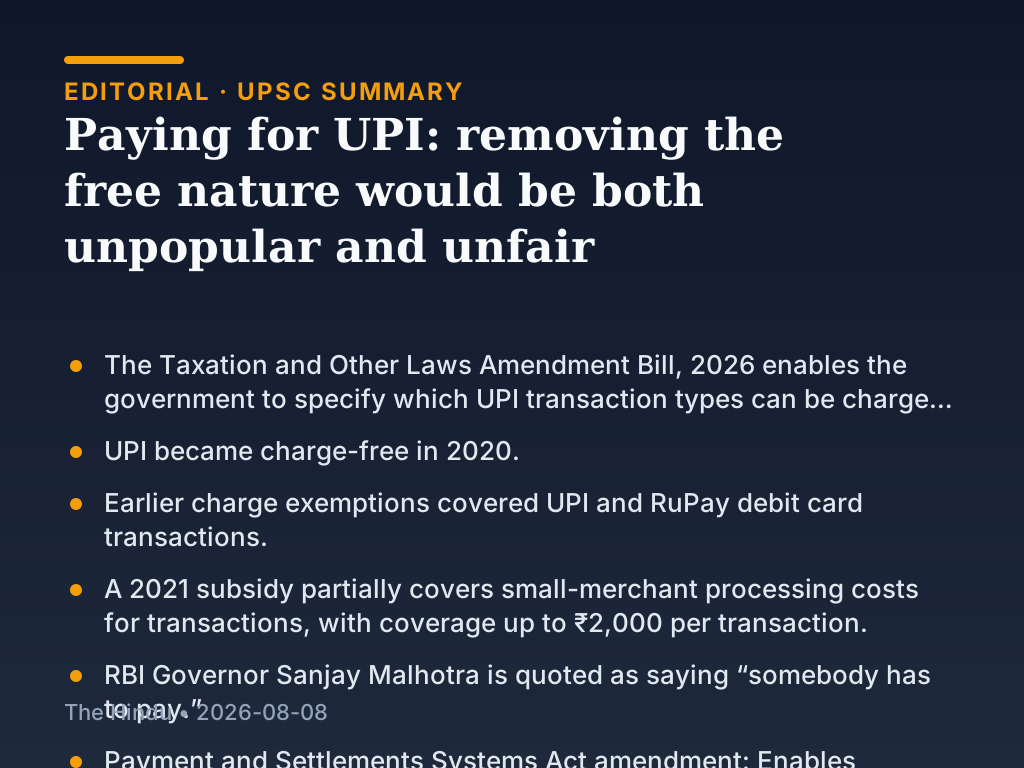
The Union government is moving to enable charges on certain UPI transactions through proposed amendments in 2026. The Taxation and Other Laws Amendment Bill, 2026 is linked to an amendment to the Payment and Settlements Systems Act that would allow the government to specify which UPI transaction types can be charged.
The final, official list of chargeable UPI transaction types is not yet fully public. The initial scope under discussion includes limiting charges to selected transaction types such as higher-value transactions and large merchants (for example, merchants with higher turnover). The amended framework can allow the government to widen coverage later, if it chooses.
Background and earlier position (UPI made free; charge exemptions)
UPI became charge-free in 2020. Earlier charge exemptions covered UPI and RuPay debit card transactions, limiting the ability of banks and payment processors to impose transaction charges on these modes in the charge-exempt setup.
Public trust and adoption perceptions shape how users view payment pricing changes. The policy debate is connected to the public memory that demonetisation pushed people toward UPI and later discussions on making payments chargeable.
Related current affairs
- Pay wall: Removing UPI’s free nature will not only be unpopular but also unfair
- RBI says ‘someone will have to pay the cost’ of UPI transactions
- RBI governor says someone must bear the cost of charging for UPI transactions
- Government assures no charges for UPI users; MDR, if any, will be nominal and threshold-based
- UPI and the cost of policy reversal
- Rajya Sabha clears two Bills; Minister says consumers will not pay UPI charges