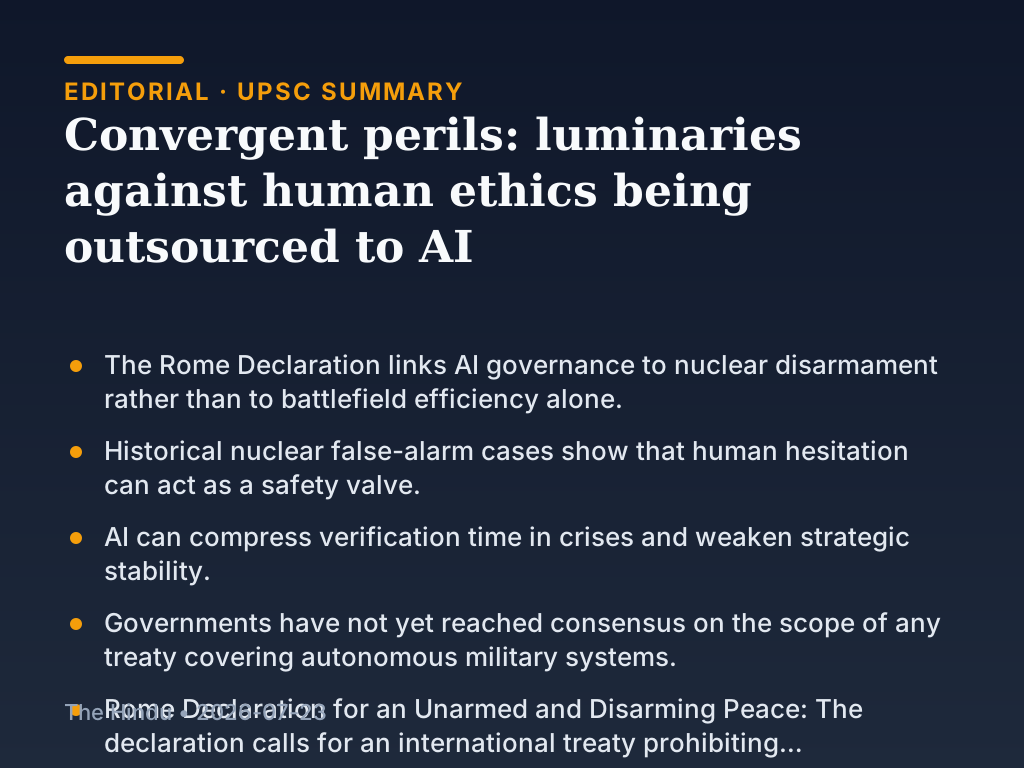
The central concern is that AI systems linked to military command structures could compress the time available for verification and retaliation decisions. In a nuclear crisis, faster machine-driven responses may weaken the human hesitation that has historically acted as a safety check.
Background and earlier position
What happened now
The declaration is presented as both a moral warning and a strategic intervention. It argues that the threat is plausible, not merely speculative, and that governments should treat human control as a baseline for restraint.
Related current affairs
- Jitin Prasada holds bilateral meetings in Morocco on trade, investment and digital transformation
- What changes when AI moves from reading viral genomes to designing them?
- Russian strikes/Ukraine missile shortage (photo + caption block)
- Google’s AI advantage faces its biggest test yet
- AI speech recognition model trained on 65 Indian languages and dialects released
- Parliament Question: Government schemes and missions for Artificial Intelligence, Research and Innovation