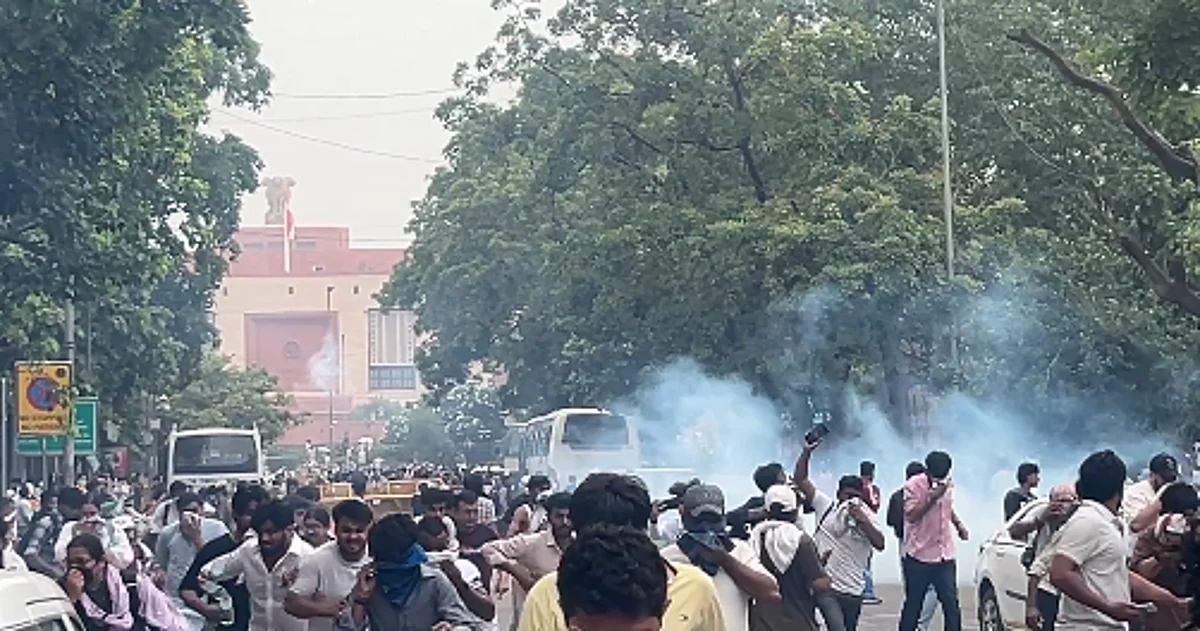
The Supreme Court declined an urgent suo motu intervention on allegations of police brutality during a student protest crackdown on July 20. The refusal is relevant because it touches the judicial response to alleged excesses by the police, the constitutional place of protest, and the limits of immediate court intervention in matters already charged with public controversy.
A lawyer informed the court that video evidence showed police excesses. The Chief Justice of India said the court’s time should not be wasted and declined to examine the material immediately. The Bench also included Justice Joymalya Bagchi and Justice V. Mohan.
The submission before the court said the protest involved thousands of students demanding fair examinations, reforms in the National Testing Agency, and the resignation of the Education Minister over alleged paper leaks. The Supreme Court did not accept the request for an urgent hearing.
Why the issue matters for UPSC
The episode is important for GS2 because it connects judicial discretion, police accountability, and the right to peaceful protest. It also has a GS4 angle on proportionality, restraint, and the ethical use of force by state agencies.
Background and earlier position
Related current affairs
- Pleas in SC allege illegal detentions in Delhi and Bihar connected to protests
- ‘Don’t play politics’: SC on Ram Temple donation theft case
- Bihar turning police into a ‘weapon’ to evade accountability, says Rahul
- Supreme Court statement says allegations against sitting judge must follow institutional mechanism
- JMI admission lapses: protest site cleared, 4 students suspended
- SC notice to Jharkhand on plea on exam irregularities