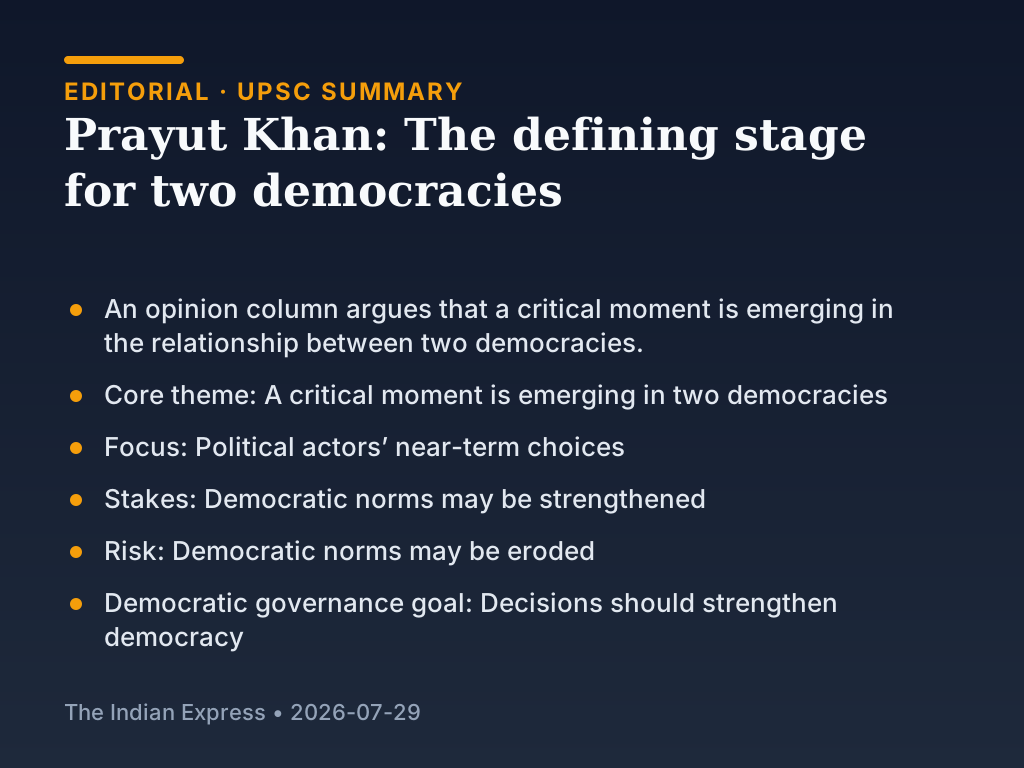
What happened (core claim)
Background and earlier position
The supplied material does not name the two democracies, the political actors, or any concrete laws, institutional actions, or dates. Therefore, the only usable background is the general governance principle that democratic norms depend on how political actors behave and how institutions enforce accountability and legal limits. Democratic norms survive when political actors accept lawful constraints and when accountability mechanisms can correct violations.
What changed now (defining stage framing)
Why it matters for UPSC
Related current affairs
- Congress steps up attack on NTA over UGC-NET re-test
- How personality cults derail democracy
- Triumph of justice vs Hussain a BJP man: parties trade barbs
- Editorial/Opinion: The Editorial Page (title visible: “Opposition cannot only oppose, what it needs to propose”)
- The editorial page: Neither government nor Opposition can look youth in the eye on education