What happened: the essay’s warning against personality cults
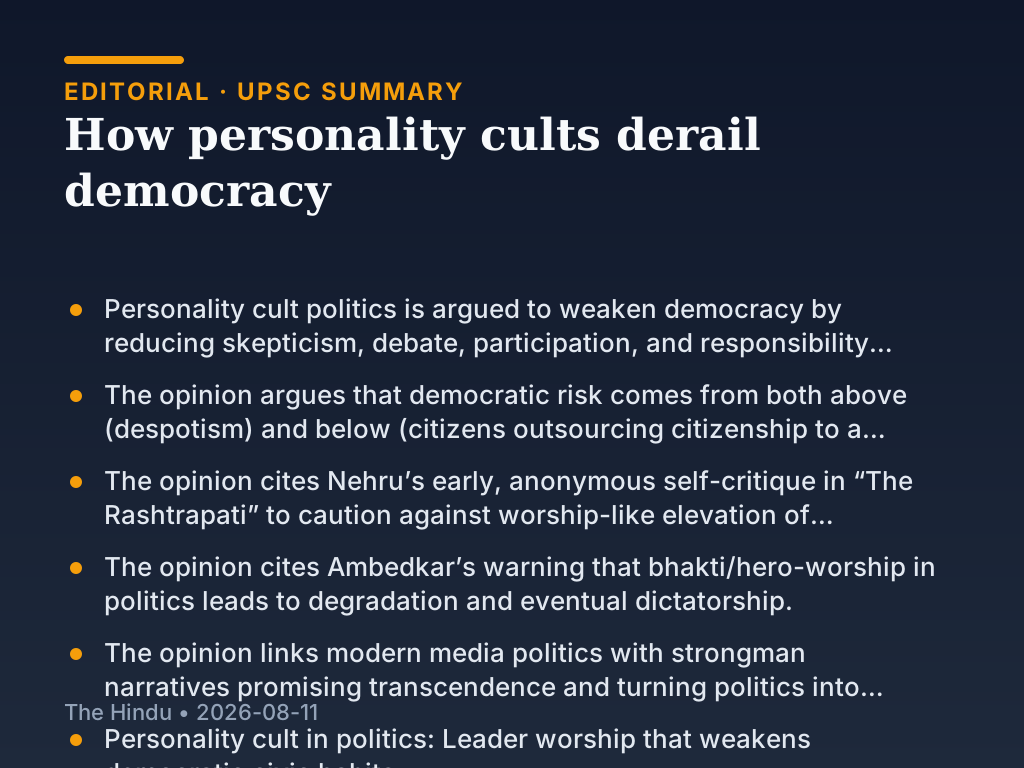
A The Hindu opinion argues that personality cults—elevating political leaders into near-messianic figures—derail democratic rule. The opinion highlights a dual risk: democracy weakens not only through authoritarian power imposed from above, but also through citizen temptation from below to outsource civic responsibility to a larger-than-life person. The opinion links this shift to reduced skepticism, debate, participation, and responsibility in civic life.
Background and earlier position: political myths exist, but democracy needs scrutiny
The opinion acknowledges that political cultures can craft myths around individuals. It then draws a limit condition for democratic survival: democracy becomes fragile when leaders become objects of worship rather than accountable officeholders tested by institutions and procedures.
Concepts used: scrutiny and accountability instead of bhakti/hero-worship
To explain why leader-worship is dangerous, the opinion invokes Ambedkar’s warning that bhakti (devotional worship) or hero-worship in politics leads to degradation and eventually dictatorship. The opinion contrasts devotion with scrutiny and accountability—public checking of power through reasoning, criticism, and institutional rules—arguing that democratic citizenship requires active critical attention to power, not emotional devotion to a person.
Related current affairs
- FROM THE ARCHIVES: Homai Vyarawalla and early photojournalism around Jinnah and Nehru
- Leave devotion out of politics (From the Archives): The Rashtrapati (signed 'Chanakya')
- How personality cults derail democracy
- Prayut Khan: The defining stage for two democracies
- Marathi and the long politics behind the language question