What happened
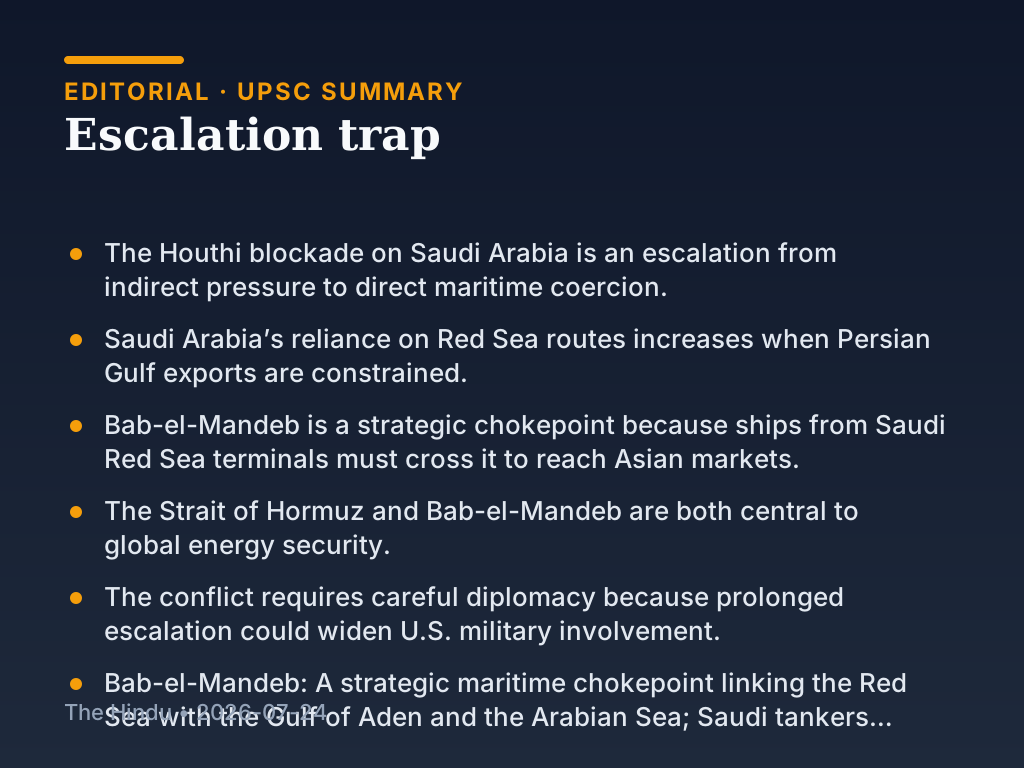
The Houthis’ decision to impose a blockade on Saudi Arabia marks a serious escalation in the West Asia conflict involving Iran, Yemen, Saudi Arabia, and the United States. The blockade threat matters because maritime routes and energy exports can quickly become instruments of war.
Background and earlier position
The Houthis had largely avoided direct escalation because a fragile ceasefire with Saudi Arabia was in place, even though the Houthis control much of Yemen’s population centres, including Sana'a. The ceasefire collapsed after an attack on Sana’a airport, which the Houthis blamed on forces linked to Yemen’s internationally recognized government and backed by Saudi Arabia.
Saudi Arabia had already faced pressure because Iranian actions constrained Persian Gulf exports and pushed Riyadh toward Red Sea shipping routes, especially through Yanbu. Tankers from Yanbu to Asian markets must pass through the Bab-el-Mandeb chokepoint, which increases Saudi vulnerability because the Yemeni coastline on that route is Houthi-controlled.
What changed now
Related current affairs
- Houthi sea blockade of Saudi Arabia at Red Sea gateway
- Yemen’s Houthis open a new war front with naval blockade on Saudi
- Iran vows ‘eye for an eye’ as U.S. bombing continues
- Yemen: Houthi rebels claim attack on Saudi military vessel in Red Sea
- Trump says US has “total control” over Hormuz; Iran says no
- Trump vows to hit a bridge or power plant in Iran for each Hormuz attack