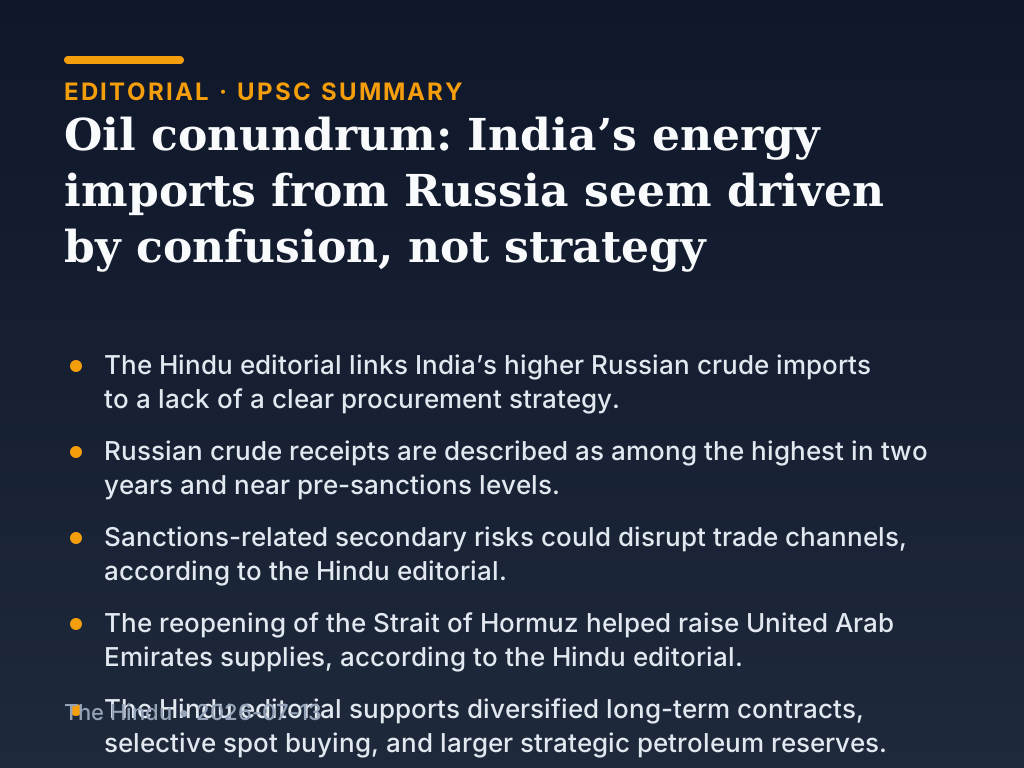
India’s higher crude oil imports from Russia have become a question of energy strategy, not just price. India’s oil purchases from Russia in May/June 2026 appear commercially attractive, but the same pattern raises risks related to sanctions, shipping, pricing, and payment choices.
What the Hindu editorial says
The Hindu editorial also argues that yuan-based settlements could aid China’s currency internationalisation, even if capital controls limit broader effects on the rupee. The Hindu editorial presents this as an added cost of payment choices that are not shaped by a clear strategic framework.
Risks highlighted by the Hindu editorial
The Hindu editorial identifies multiple risks in India’s oil procurement choices:
Sanctions-related secondary risks could disrupt trade channels.Supply uncertainty can rise as geopolitical events change.Russian imports reportedly carry a per-ton premium, which can raise import value even when volumes are lower.Refiners using Russian crude may face pressure on margins if refining cracks weaken.
Related current affairs
- Higher Russian oil imports a deliberate strategy, says government (response to ‘Oil conundrum’ editorial)
- Hormuz crisis: crude imports surge 60%; net oil, gas imports up 45%
- New LPG connections still on hold amid West Asia tensions
- India improvising on the fly as Strait of Hormuz waters remain still
- Strait of Hormuz: U.S. hopeful deal to reopen soon
- Ship hit, but U.S. hopeful strait deal to be done soon