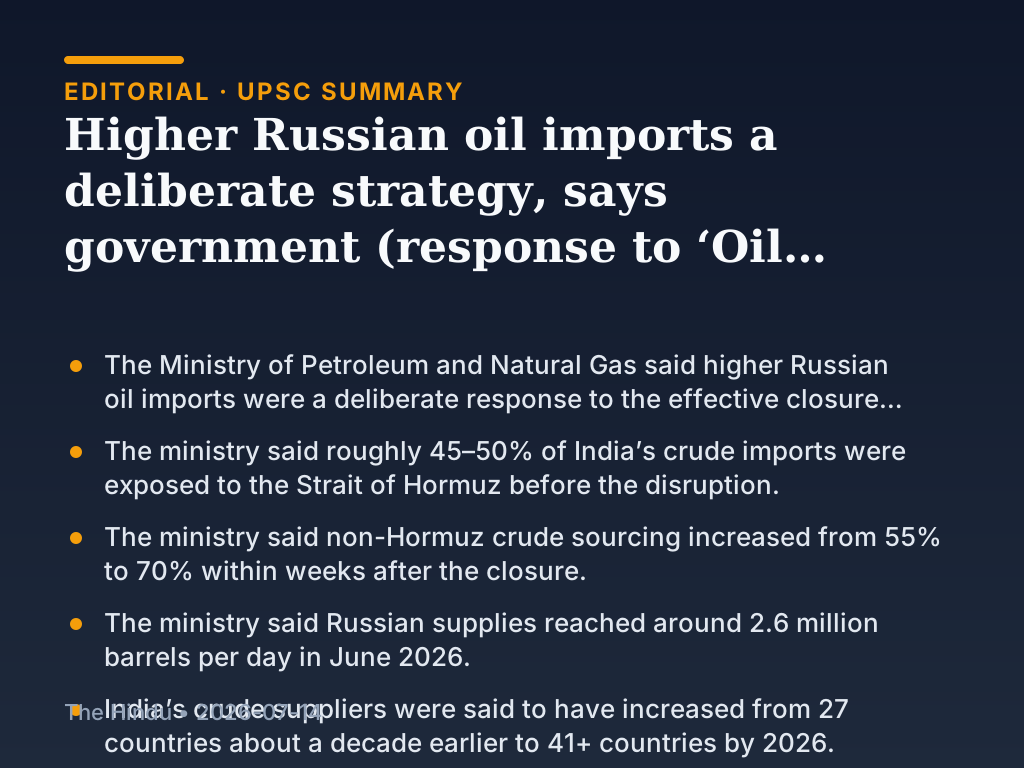
The Ministry of Petroleum and Natural Gas said India’s higher oil imports from Russia were part of a deliberate supply-diversification strategy after the effective closure of the Strait of Hormuz in February 2026. The ministry issued the response after a The Hindu editorial argued that Russia’s share in India’s oil imports had crossed 40% in May 2026.
The Strait of Hormuz was described by the Ministry of Petroleum and Natural Gas as a major global energy chokepoint whose closure at the end of February 2026 cut roughly one-fifth of global oil and gas flow. India was more exposed because about 45–50% of its crude oil imports had been transiting that waterway.
According to the Ministry of Petroleum and Natural Gas, India quickly shifted to alternative supply sources. It said non-Hormuz crude sourcing increased from 55% to 70% within weeks, and Russian supplies rose to around 2.6 million barrels per day in June 2026, which the ministry described as more than half of India’s total crude imports for that month.
Related current affairs
- Hormuz crisis: crude imports surge 60%; net oil, gas imports up 45%
- Oil conundrum: India’s energy imports from Russia seem driven by confusion, not strategy
- Trump vows to hit a bridge or power plant in Iran for each Hormuz attack
- Tehran using Hormuz as leverage, other nations must step up: Rubio
- Vessels to and from India among top applicants for Hurmuz passage
- Iran’s disruptive strategy, its global consequences