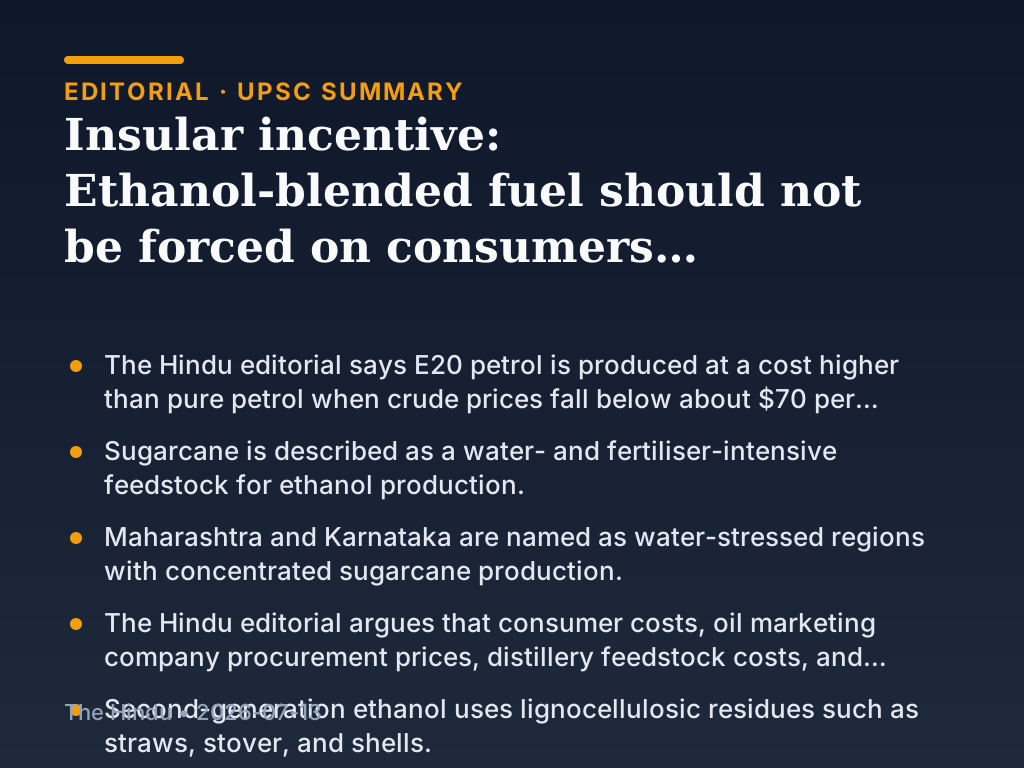
India’s ethanol-blending policy has become a debate about more than fuel. The Hindu editorial argues that E20 petrol should not be promoted at a cost higher than pure petrol when crude prices fall below about $70 per barrel.
What The Hindu editorial questions
The Hindu editorial says the stated goal of compensating farmers does not automatically justify higher fuel costs for consumers. It asks whether lower crude import bills, environmental gains, and higher farmer incomes are large enough to offset the burden on consumers, especially poorer households.
The Hindu editorial also says the programme is heavily dependent on sugarcane, a crop that is water- and fertiliser-intensive and concentrated in water-stressed regions such as Maharashtra and Karnataka. It argues that higher feedstock prices do not address major causes of low farm incomes such as post-harvest losses and limited market access.
Feedstock choice and policy design
The Hindu editorial says incentives tied to every unit of ethanol can favour the feedstock with the largest installed base, often sugarcane. It argues that ethanol policy should incorporate resource efficiency and food security, not ethanol volume alone.
Related current affairs
- Farmers need income, not price support
- Clarification on media reports regarding Supreme Court proceedings in BPCL ethanol allocation matter
- No decision on ethanol blending with petrol beyond 20%: MoS
- No decision yet on increasing ethanol blending in petrol: govt
- Sugar industry’s role in advancing ethanol blending (and impact on sugar availability)
- Core concerns