What the opinion argues (what changed in the policy conversation)?
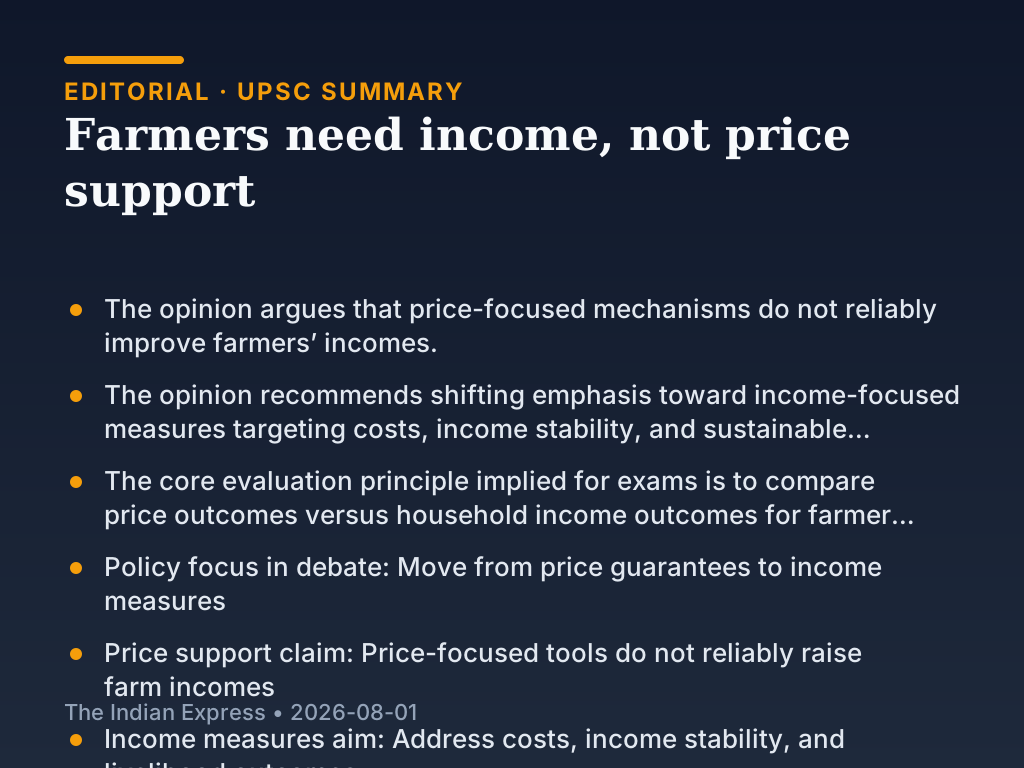
The opinion argues that India’s farm policy approaches that focus primarily on keeping prices stable—or using price support mechanisms to do so—do not consistently improve farmers’ incomes. It recommends shifting emphasis toward income-focused measures (measures designed to raise farmers’ earnings) that better account for farmers’ costs, income stability during shocks, and sustainable livelihood outcomes.
What is the background to this debate?
Farmers’ income depends on more than the market price of crops. Even when crop prices appear supported or guaranteed, farmers may still face problems such as input costs, low yields, unstable demand, weather shocks, and thin margins. In policy terms, price-focused tools try to influence output prices, while income-focused tools aim to protect or improve farmers’ earnings through a wider set of instruments.
UPSC prelims and mains questions on farmer welfare often connect three connected ideas: (1) procurement and price support used to influence agricultural markets, (2) the gap between prices at which governments buy crops and the actual costs and risks farmers face, and (3) the need for schemes that reduce income volatility and prevent distress.
What exactly does the opinion prefer over price support?
Related current affairs
- Insular incentive: Ethanol-blended fuel should not be forced on consumers irrationally
- PM Modi shares excerpts on reforms: shift to Production Linked Incentives, governance philosophy and decriminalisation
- Pradhan Mantri Janjatiya Vikas Mission (PMJVM) to strengthen tribal MFP-based livelihoods
- NMEO-OS and Pulses Mission: steps to increase domestic production of oilseeds and pulses
- YSRCP’s search for political momentum
- Food Corporation of India storage under ‘world’s largest grain storage scheme’ in Punjab pending godown construction