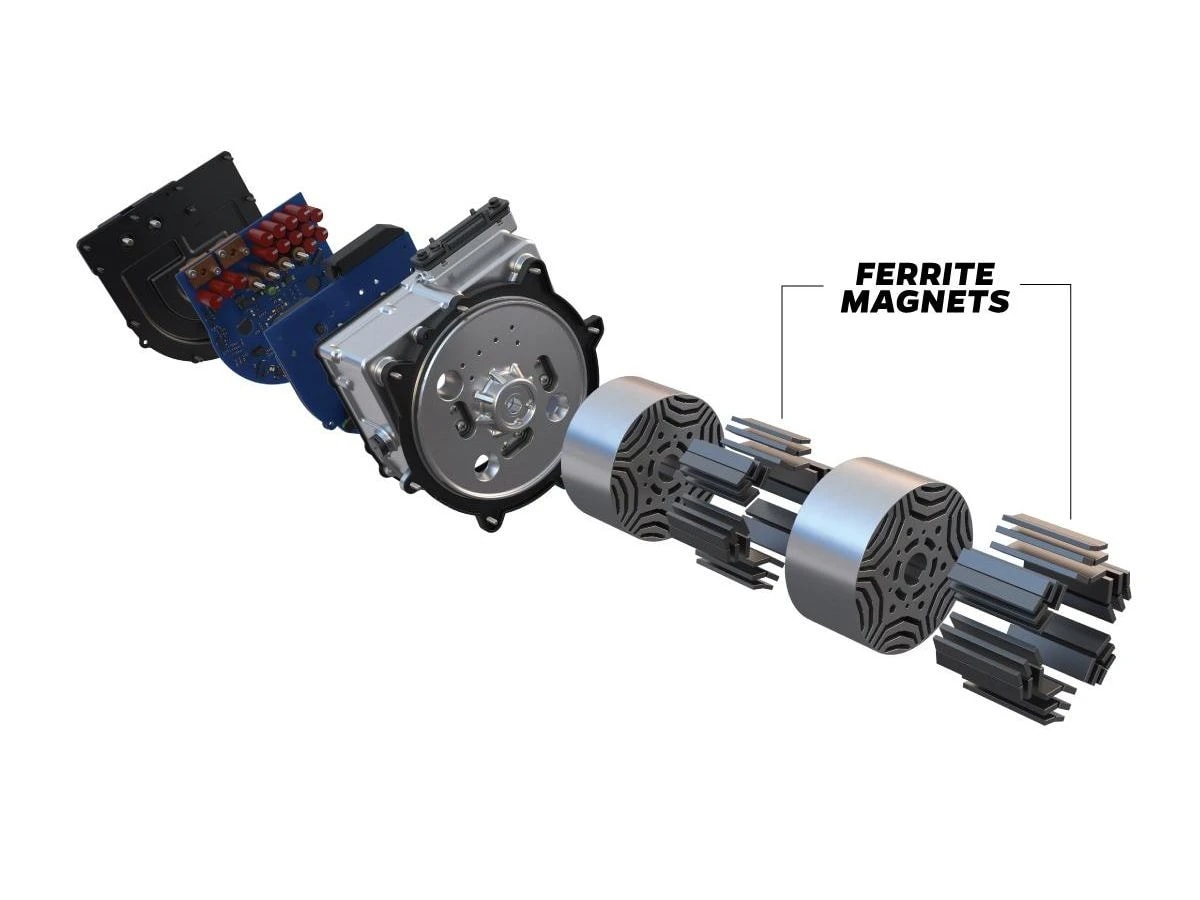
What happened: “virtual magnet” claims are mapped to electromagnet excitation
A Bengaluru startup, Vimag Labs, has made claims that it replaced rare-earth permanent magnets in electric motors with “virtual” magnets. An explainer explains the underlying motor physics and interprets Vimag Labs’s approach as controlled excitation of electromagnets rather than a new way to generate magnetism.
Electric motors create motion by using magnetic fields to convert electrical energy into mechanical force. A motor’s magnetic field can be created either by permanent magnets or by electromagnets, where copper coils are energized so they behave like magnets while current flows.
The explainer describes the standard motor structure: a rotor (the rotating part) and a stator (the stationary part). It also notes that large generators already use electromagnets with rotating direct-current excitation (direct current excitation rotates rather than staying fixed). In such systems, brushless excitation uses a rotating rectifier and another generator coupled to the same shaft to supply excitation power.
Using that principle, the explainer argues that Vimag Labs’s “virtual magnet” method amounts to software-controlled excitation of electromagnets in the motor rotor. In this interpretation, software regulates current so the magnetic field’s strength and direction change during operation.
The explainer emphasizes a key limitation: software does not create magnetism from nothing. Current in the coil still produces the magnetic field. Compared with permanent magnets (which provide a field directly and continuously), electromagnet excitation adds extra steps and control activities.