What happened: the Public Examinations (Prevention of Unfair Means) Amendment Bill, 2026 and its operational challenge
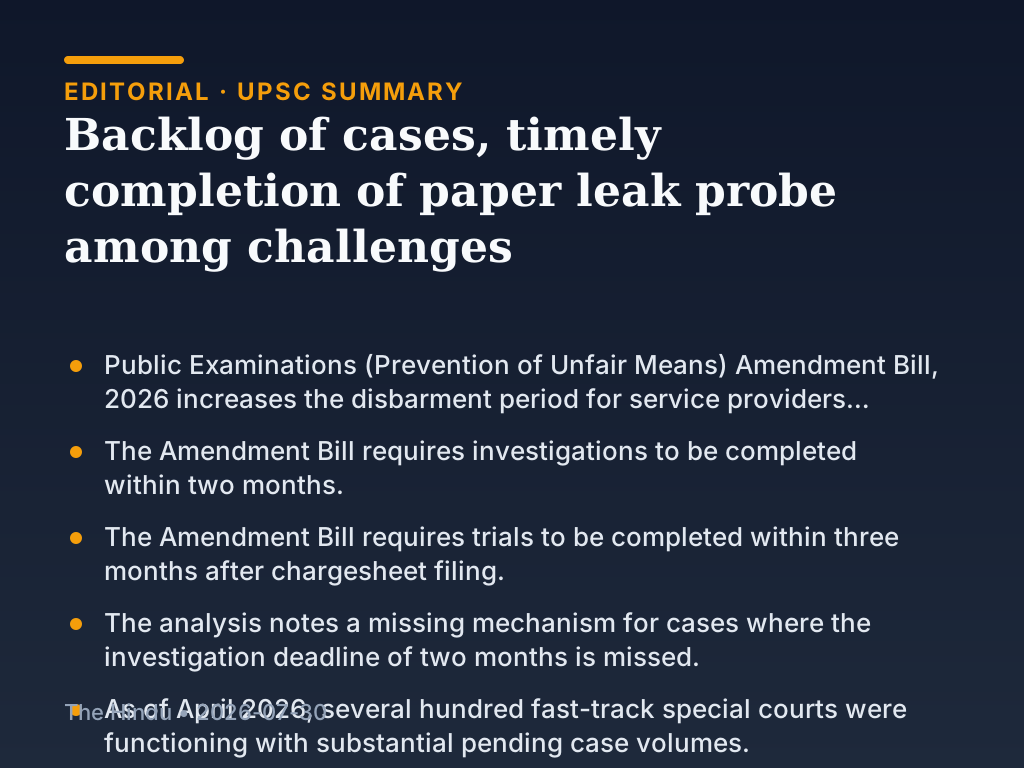
The Public Examinations (Prevention of Unfair Means) Amendment Bill, 2026 seeks to reduce examination malpractices by making investigations and trials time-bound and by increasing penalties like disbarment for service providers involved in unfair means. The key policy goal is faster legal action against exam fraud, but the feasibility of meeting strict timelines is questioned due to practical bottlenecks such as investigation completion delays and trial scheduling constraints.
Key proposals in the Public Examinations (Prevention of Unfair Means) Amendment Bill, 2026
The Amendment Bill makes three operationally important changes: investigation timelines, trial timelines, and disbarment duration for service providers.
Key provisions highlighted in the analysis include:
Disbarment period: the Amendment Bill increases the disbarment period for service providers involved in unfair means from four years to eight years.Investigation timeline: investigations are required to be finished within two months, but the analysis notes a missing operational mechanism for situations when the two-month deadline is missed.Trial timeline after chargesheet: trials must be completed within three months after chargesheet filing. The analysis flags a potential tension with judicial views on prescribing rigid outer limits for criminal proceedings.
Related current affairs
- Paper leak Bill a milestone, says govt.; Opposition calls it ‘cosmetic exercise’
- Union govt. circulates Bill to strengthen anti-cheating law
- Lok Sabha: Public Examinations (Prevention of Unfair Means) Amendment Bill, 2026 introduced
- LS passes paper leak Bill amid Opposition protests
- Public Examinations (Prevention of Unfair Means) Amendment Bill, 2026 to strengthen anti-malpractice legal framework
- What does the new Bill to prevent exam fraud say?