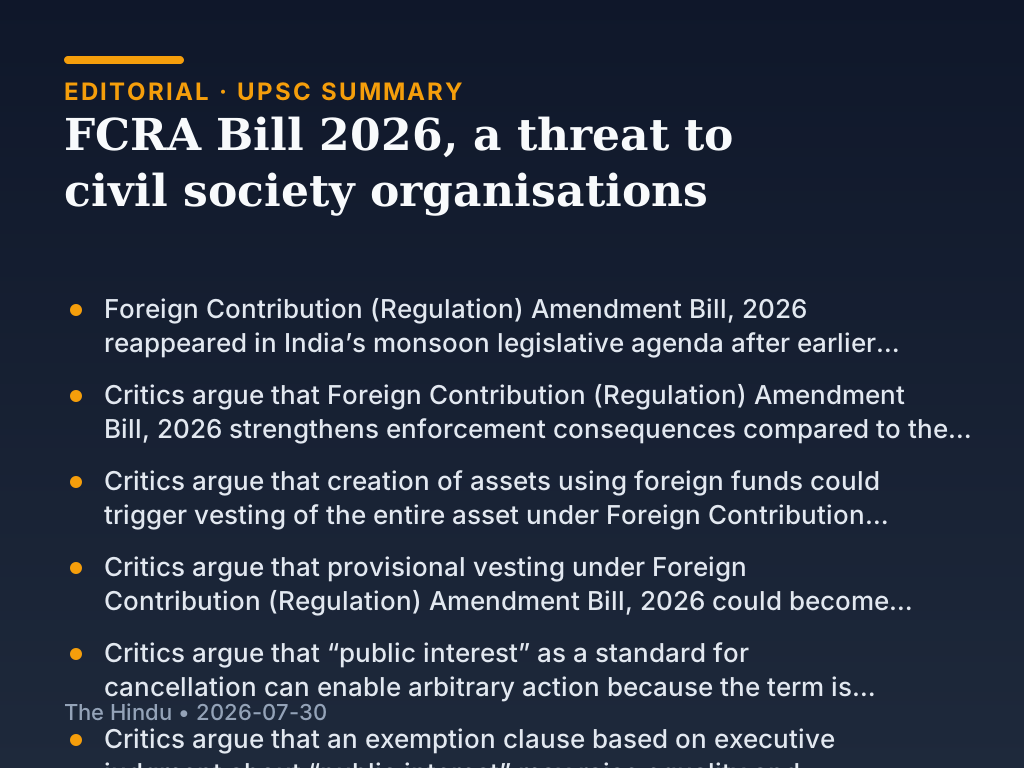
What happened: the proposed Foreign Contribution (Regulation) Amendment Bill, 2026 and the controversy over enforcement powers
The proposed Foreign Contribution (Regulation) Amendment Bill, 2026 has re-entered India’s monsoon legislative agenda and has reopened the dispute on how India regulates foreign contributions received by NGOs and related religious/cultural organisations. The core concern raised by critics is that the proposed amendment would increase state control over civil society organisations and could produce harsher outcomes than the existing Foreign Contribution (Regulation) Act framework.
Critics argue that the proposed amendment goes beyond earlier regulation by expanding the range and intensity of consequences flowing from regulatory enforcement. The concerns also connect some enforcement triggers to allegations involving forcible or induced religious conversion, with an apprehension that such complaint-based pathways could be misused against minority religious groups.
Background and earlier position: the Foreign Contribution (Regulation) Act, 2010 model
The Foreign Contribution (Regulation) Act, 2010 is described as having a comparatively structured approach to regulating foreign contributions. Under the 2010 model, organisations are required to obtain registration certificates, and regulatory restrictions are aimed at preventing misuse of foreign contributions for political purposes and related destabilisation risks.
In the framing used for the dispute, foreign contributions are meant to support humanitarian and socially beneficial activities, while the legal framework is justified as a safeguard against foreign political destabilisation.
Related current affairs
- FCRA Amendment Bill, 2026 and revised Rules (22 June 2026): major changes
- The FCRA Bill expands state control over NGOs
- Regulating funds: A threat to civil society organisations
- New FCRA bill is about control, not transparency. It must be opposed
- FCRA: Foreign Contribution (Regulation) Act — framework, objectives, and 2026 amendment changes
- FCRA amendments need redrafting in the JPC