What happened: open-weight AI and reported limits on overseas access
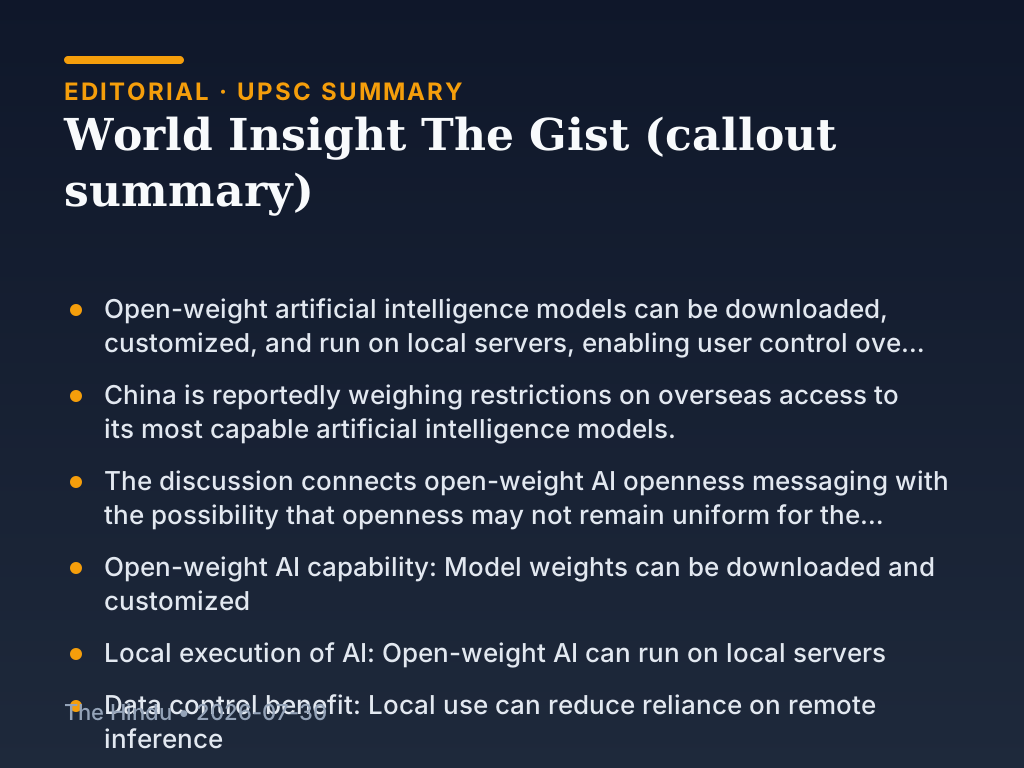
Open-weight artificial intelligence models are described as models that can be downloaded, customized, and run on local servers. In ordinary terms, this allows an organisation to deploy the model on its own infrastructure rather than relying only on a remote provider’s hosted service via an API (application programming interface).
The current discussion includes a claim that China is reportedly weighing restrictions on overseas access to its most capable artificial intelligence models. The word “reportedly” should be treated as an indicator of an unconfirmed policy direction rather than a final, legally settled rule.
Background and earlier position: open-weight AI as openness-by-design
Open-weight AI governance focuses on what users receive—model “weights” (the trained parameters). When weights are available, users can run the model independently on their own systems and adapt it for local use cases.
Open-weight deployment can support more user-side control over operational choices, including how data is handled, compared with reliance on a third-party hosted model accessed only through an API.