What happened
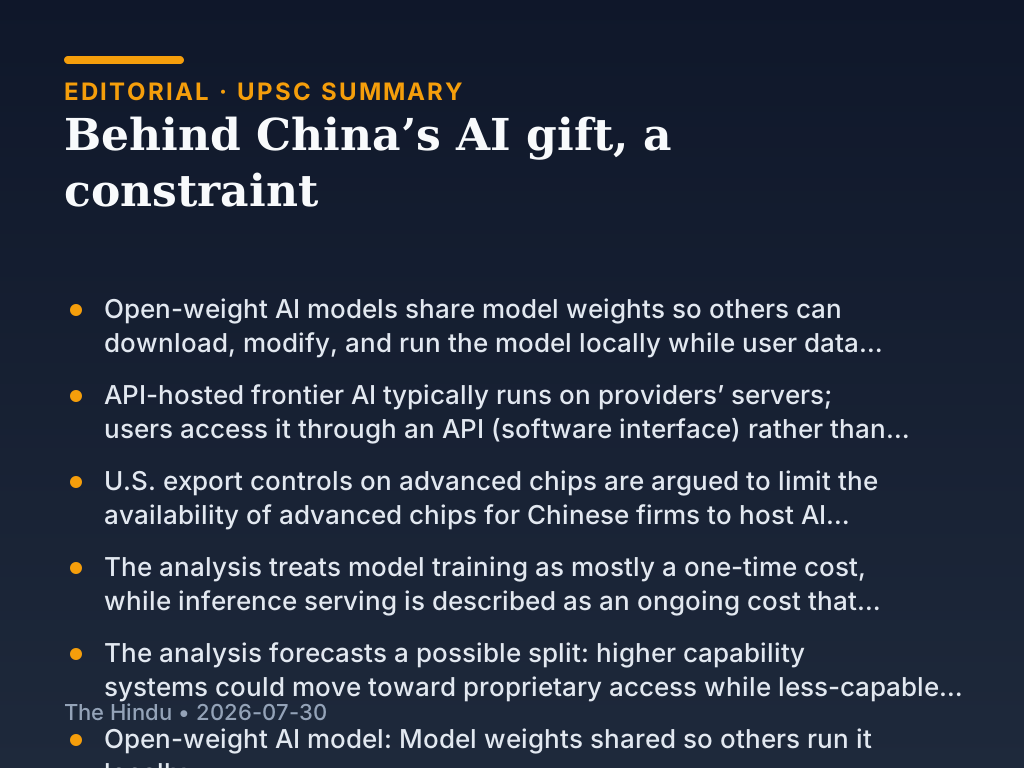
China is distributing open-weight AI models—models whose weight files are shared so others can download, modify, and run the model locally while user data stays on the user’s side. China’s open-weight promotion is connected to U.S. export controls on advanced chips—rules that restrict shipment of high-end semiconductor hardware to certain destinations.
Background and earlier position
AI model access and deployment can be understood through two common patterns: API-hosted models: a provider hosts the model on its servers; users access it through an API (a software interface) and typically do not run the model locally.Open-weight models: the model weights are shared; other actors can host the model and run it using their own infrastructure and data pipelines.
What changed now
China’s openness strategy faces a compute bottleneck focused on AI inference (using a trained model to produce outputs for new requests). The argument links the bottleneck to U.S. export controls that reduce the ability of Chinese firms to obtain advanced chips needed for high-volume inference serving (serving many users).
Related current affairs
- Is China’s AI bet turning U.S. AI labs into new Apple?
- Why is China’s AI push gaining ground?
- World Insight The Gist (callout summary)
- Jitin Prasada holds bilateral meetings in Morocco on trade, investment and digital transformation
- What changes when AI moves from reading viral genomes to designing them?
- Google’s AI advantage faces its biggest test yet