What existed earlier
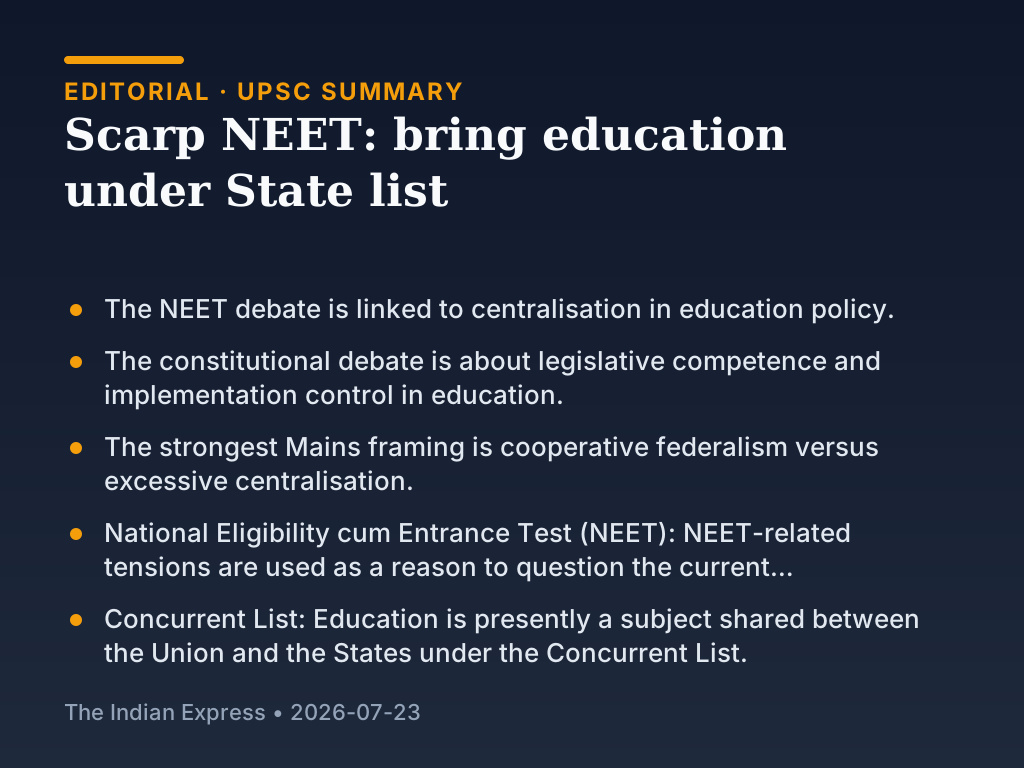
Education has been a shared legislative field under the Concurrent List. Under this arrangement, both the Union and the States can make laws on education, which has allowed the Union government to shape national policy and common entry standards while States continue to administer much of the sector on the ground.
What the constitutional debate argues now
The core claim is that the current framework has tilted too far towards centralisation. State List placement would give State governments clearer authority over school and higher-education policy, make implementation more responsive to local conditions, and reduce conflicts created by centrally imposed education decisions.
Why the NEET debate matters
The National Eligibility cum Entrance Test (NEET) is used as a symbol of the larger dispute over who should control education policy. The underlying concern is that a single national mechanism can create uniformity in admissions, but it can also generate friction where States believe their priorities, institutions, and student realities are being overridden.
Related current affairs
- Lingering challenges: India’s crisis in education should not be treated as a technical failure
- AI and editorial-style sidebar block (left column)
- Scrap NEET, bring education under State List: TVK
- NEET’s promise has failed; it’s time to trust States
- Rapper Arivu held during anti-NEET protest, meets CM after release
- Better learning, better outcomes: an AI tutor for every child in India