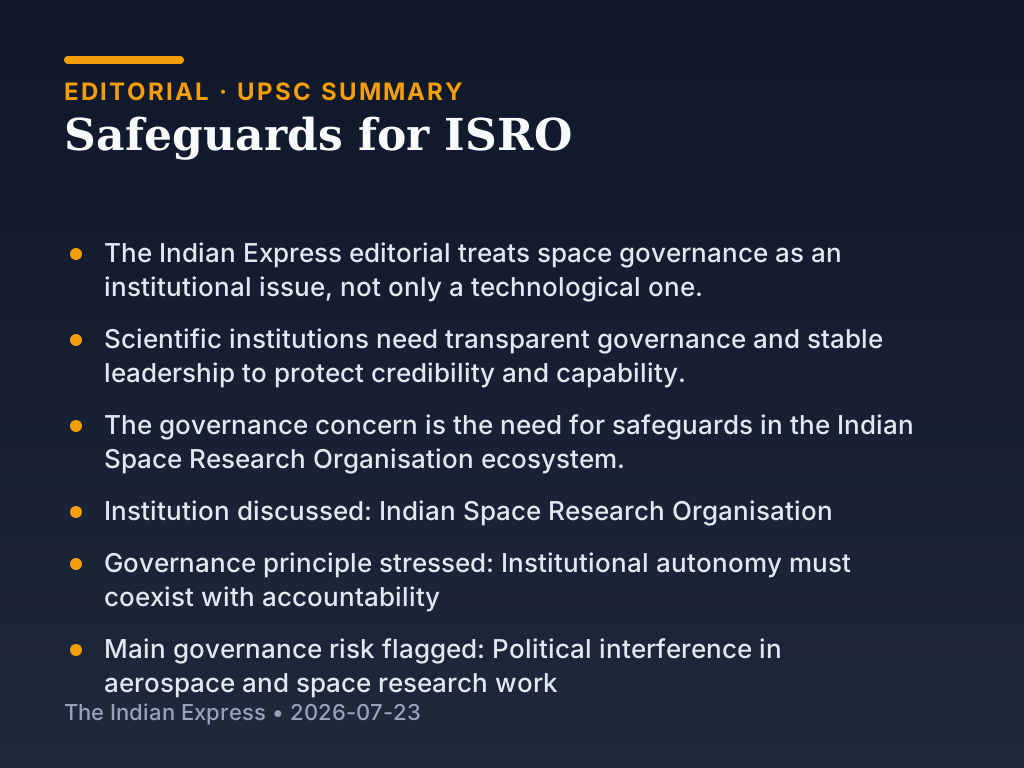
Why is red the colour of danger?
A science Q&A explains why red is effective for danger signalling because of physics, biology, and visual contrast.
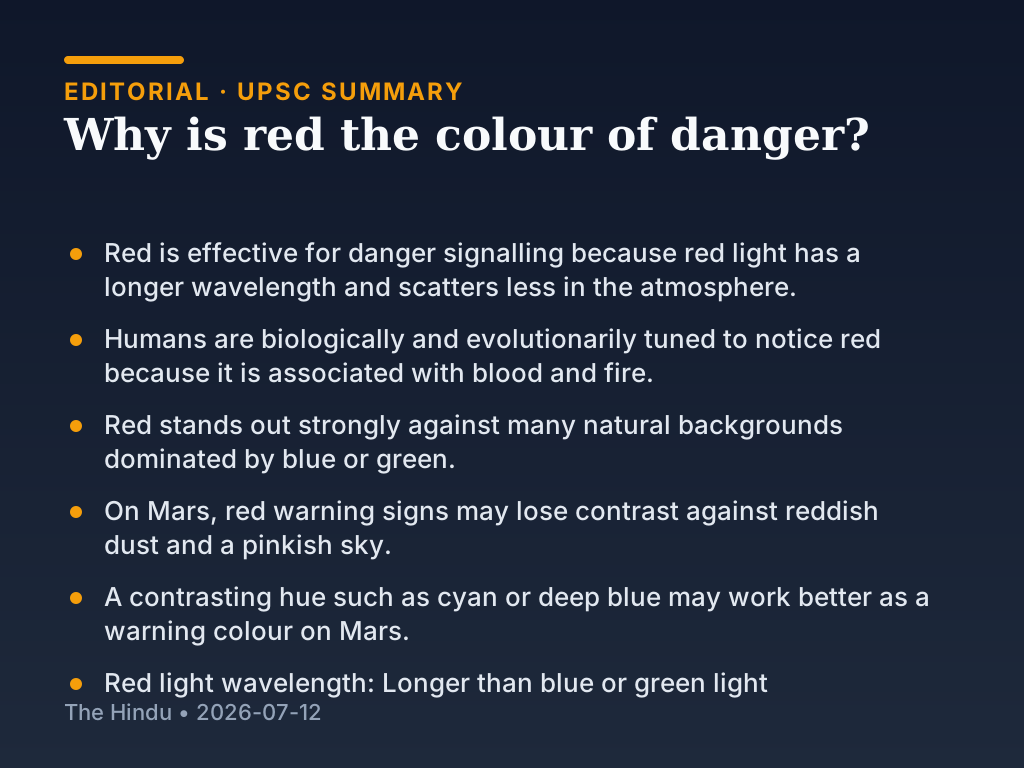
- Red light has a longer wavelength than blue or green light and scatters less in the atmosphere.
- Humans notice red strongly because of associations with blood and fire.
- Red is effective for danger signs because it contrasts strongly with many natural backgrounds.
- A red stop sign may blend into the reddish dust and pinkish sky on Mars.
What the science Q&A says
The science Q&A explains why red is often used for danger signalling. It says red light has a longer wavelength, scatters less in the atmosphere, and therefore stays visible from farther away through fog, rain, or dust.
The science Q&A also says humans are tuned to notice red because it is associated with blood and fire. That association can trigger a heightened alert state, often described as a fight-or-flight response.
UPSC can link the topic to basic optics, atmospheric scattering, human sensory biology, and context-specific design. The Mars example also opens a geography-and-technology angle on how environmental conditions alter visual communication.
Related dispatches