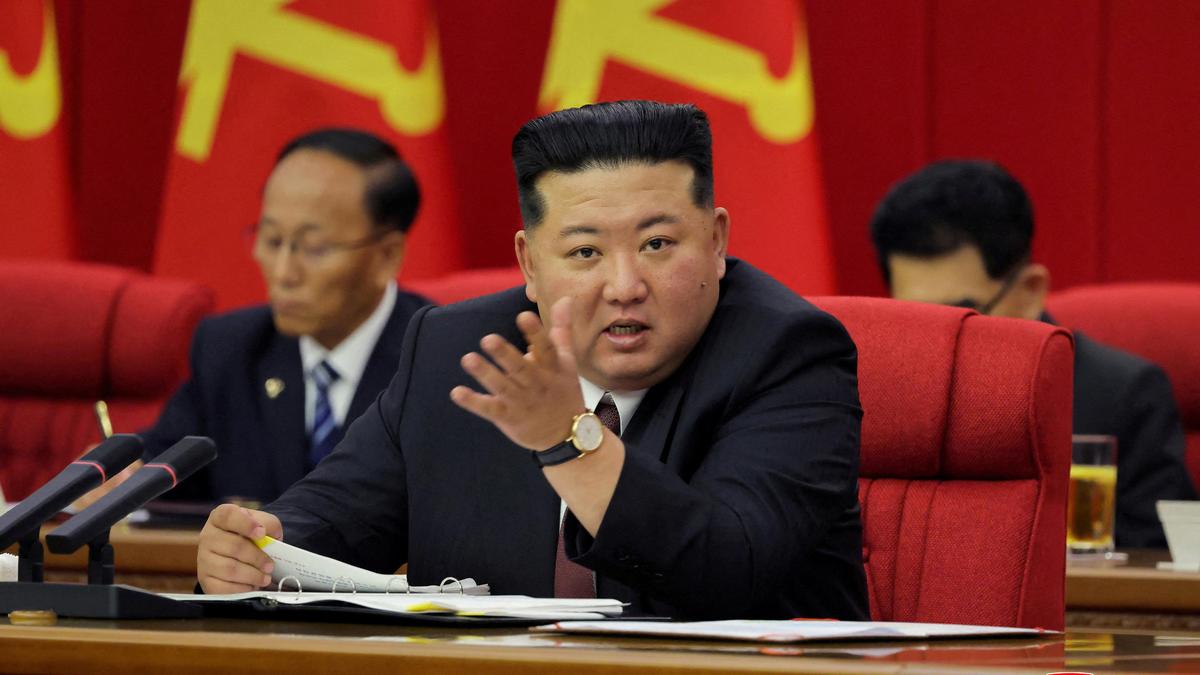
North Korea said that denuclearisation should begin with the United States and its allied countries, not with Pyongyang alone. The statement came in response to NATO’s military expansion after the alliance summit and included a rejection of calls to give up North Korea’s nuclear arsenal.
The position reinforces North Korea’s long-standing use of nuclear weapons as a security guarantee and bargaining tool. It also places the Korean Peninsula issue within a wider debate on alliance politics, deterrence, and strategic stability.
What changed now
North Korea linked denuclearisation demands to NATO’s recent expansion and said it would further strengthen its nuclear forces. The current statement sharpens confrontation by presenting allied military cooperation as the first issue to be addressed before any nuclear disarmament demand on Pyongyang.
Why this matters for UPSC
The development is relevant to GS2 international relations and GS3 security because it illustrates how nuclear diplomacy depends on threat perception, alliance behaviour, and bargaining leverage. It also helps revise the broader idea that denuclearisation negotiations rarely succeed without reciprocal security guarantees and phased commitments.
Related current affairs
- Sailor killed in drone strike laid to rest in Keralam
- IN BRIEF: U.S. to re-evaluate J&K travel advisory: envoy (‘Key part of India’)
- NATO enters a new strategic era of transformation — NATO’s European shift offers India new strategic and defence opportunities
- BRIEFLY: Russian envoy summoned after missile lands on NATO ally; Algeria; Greece; India/other items
- Poland summons American ambassador after ... issue
- US jets after missile landing in Poland? NATO scrambles jets after missile lands in Poland