What happened
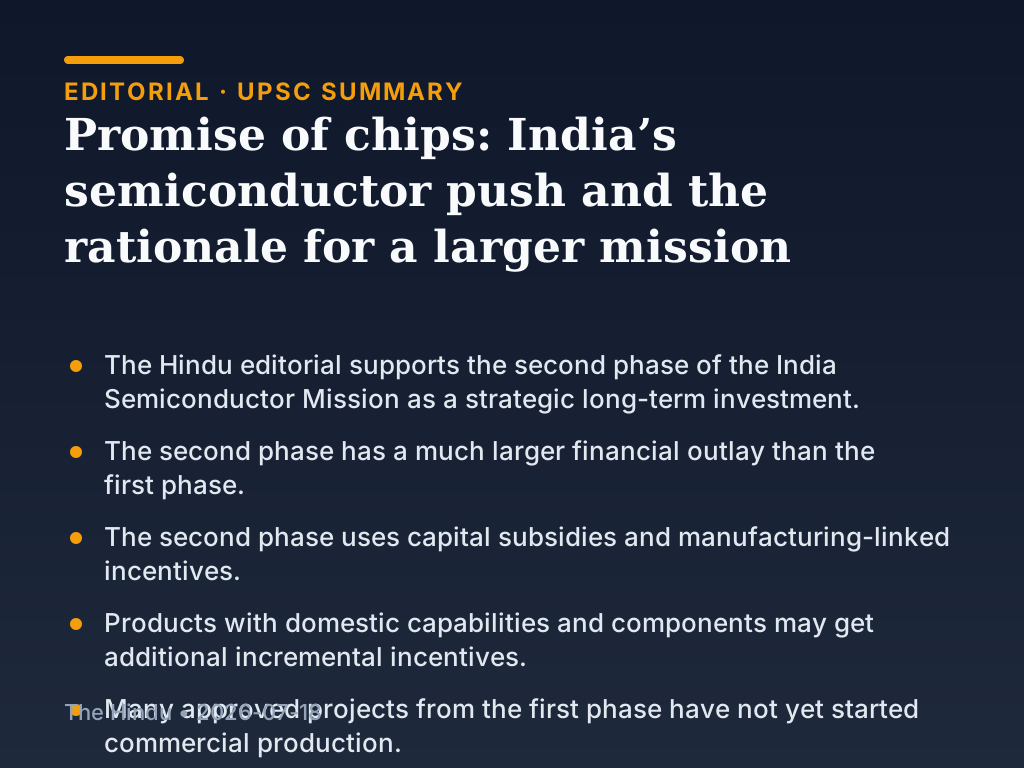
The Hindu editorial discusses the second phase of the India Semiconductor Mission and supports its much larger financial outlay. The larger allocation matters because semiconductor capability is not only an industrial target but also a strategic investment in electronics manufacturing, talent, and supply-chain resilience.
How the mission is designed
The second phase will channel money through capital subsidies for selected projects and manufacturing-linked incentives tied to per-unit output after sales. Additional incremental incentives are intended for products that rely on domestic capabilities and components.
Background and earlier position
The first phase of the India Semiconductor Mission has already approved facilities and projects, but many approved units have not yet started commercial production. The second phase therefore follows an unfinished industrial build-out rather than a fully mature production ecosystem.
Related current affairs
- What are the goals of Semicon 2.0 and the Mobile Phone Manufacturing Scheme?
- Empowering Governance through Digital Infrastructure (Digital Public Infrastructure, DPI)
- Government approves 2 Electronics Manufacturing Clusters (EMCs) in Tamil Nadu at Manallur and Pillapaikkam
- What goals does Semicon 2.0 aim to achieve? (India Semiconductor Mission phase 2 and Mobile Phone Manufacturing Scheme)
- What goals does Semicon 2.0 aim to achieve? How is it different from the first phase? What incentives does the Mobile Phone Manufacturing Scheme offer?
- A semiconductor vision beyond the shop floor