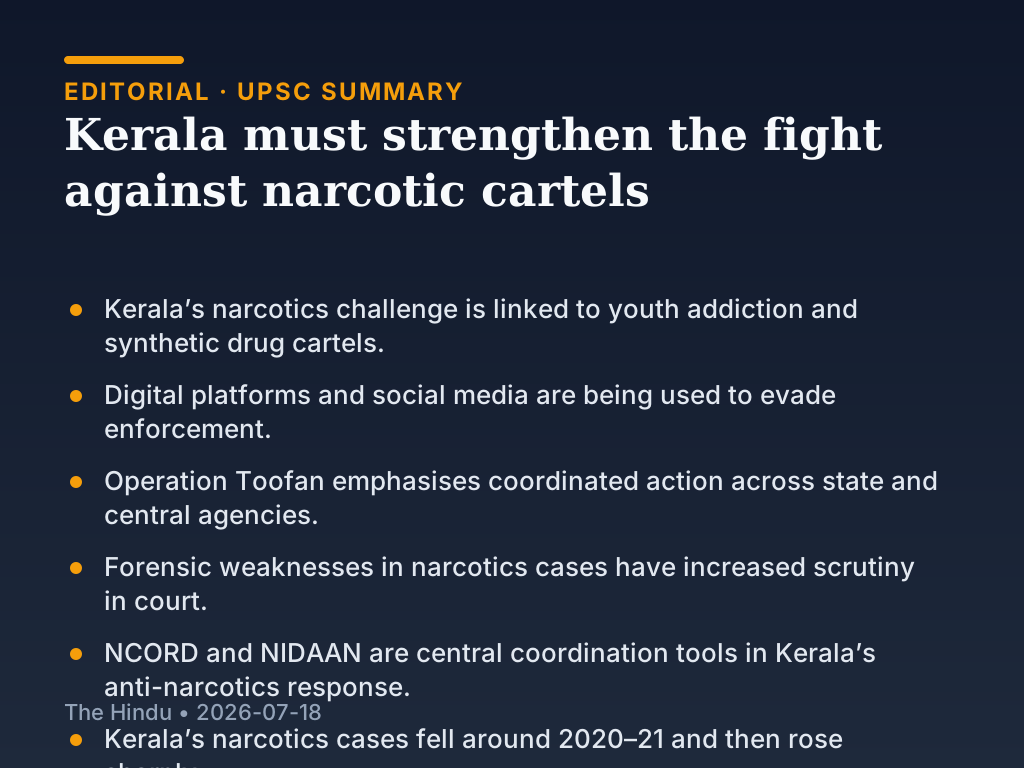
Kerala’s anti-narcotics campaign has become a major internal-security and governance issue. Kerala has seen a sharp rise in youth addiction to narcotic drugs and psychotropic substances, while synthetic drug cartels have used digital platforms and social media to reduce the risk of detection.
The Hindu editorial presents Operation Toofan as a more integrated response. The operation links coordinated policing across states and central agencies, participation by state departments, public engagement, rehabilitation, and faster prosecution.
The Hindu editorial also highlights two enforcement concerns. First, cartel networks are complex and investigations often reach only lower-level operators. Second, forensic weaknesses in narcotics cases have increased scrutiny on the quality of evidence and the sustainability of prosecutions.
Related current affairs
- Battling drug abuse
- Vision Document on Narcotics Control (2026-2029) released
- Operation Toofan a social movement, says Chennithala (Keralam anti-drug drive)
- In Brief: Kerala stalling work at Mullaperiyar (obstructionist attitude)
- Steps to prevent illicit trafficking of narcotics (Vision Document 2026-2029, NDPS/PITNDPS enforcement, NCORD/JCC, financial investigations, capacity building, international cooperation)
- Kerala to put in place disaster resilience system: Satheesan