What happened: faster disposal within assigned categories, with risk of system-wide delay redistribution
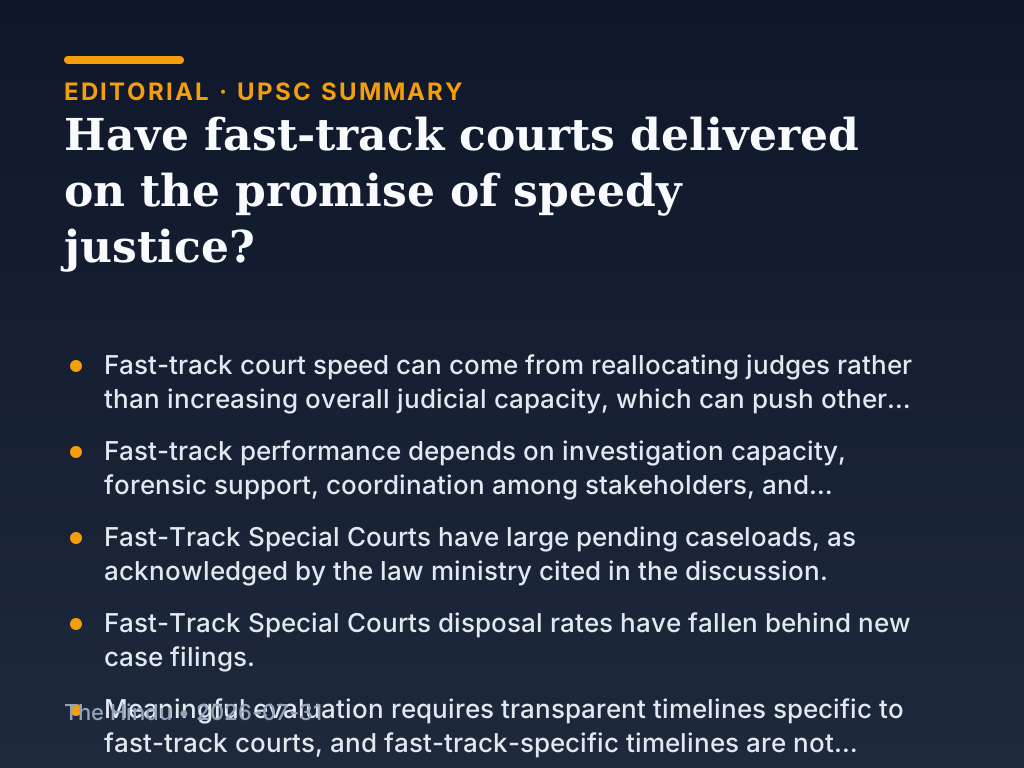
Fast-track courts are designed to speed up case disposal for selected criminal case categories. The central concern is a trade-off problem: fast-track speed can be achieved by reallocating judges rather than increasing total judicial capacity. When judges shift to fast-track hearings, non-fast-track matters can lose access to courtroom time and accumulate further backlog.
Trial speed depends on inputs beyond courtroom listing. The discussion highlights investigation capacity (police ability to produce charge-ready material), forensic support (timely forensic processing), coordination among stakeholders (police, prosecution, courts, and court staff), and procedural discipline (examples include timely witness depositions and fewer adjournments).
The discussion cites a law ministry acknowledgement that Fast-Track Special Courts face a large pending caseload. It also states that Fast-Track Special Courts disposal rates have fallen behind new case filings, meaning new inflow can outpace clearing capacity even if some cases move faster.
Background and earlier position: fast-track courts operate within India’s broader pendency crisis
Fast-track courts are evaluated against India’s wider trial-court pendency problem. The key performance question is whether fast-track courts reduce overall delays or mainly relocate delays across case categories. Even if fast-track courts clear assigned matters quickly, weaknesses in investigation, forensics, prosecution preparation, and court scheduling can still limit overall improvement.
Related current affairs
- Massive backlog in fast-track courts an eye-opener: Congress
- Judge Baliga takes charge of court set up to hear paper leak cases
- No debate while Pradhan stays in office: Opposition
- There are 17,54,675 pending cases in fast-track courts; low conviction rates
- Bill on financial evidences: Critical overhaul, but concerns remain
- Odisha constable lynching: 11 named in chargesheet