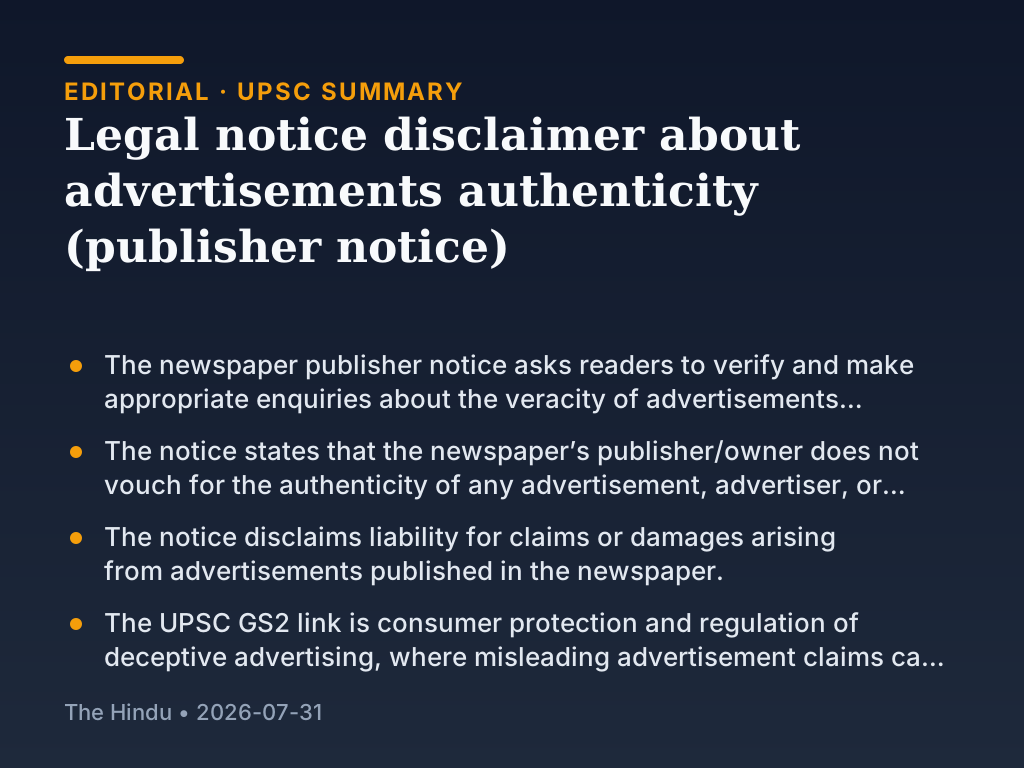
What happened: a newspaper publisher notice about advertisement authenticity and responsibility
A newspaper published a disclaimer that asks readers to verify and make appropriate enquiries about the veracity (truthfulness) of advertisements before responding. The disclaimer clearly states that the newspaper’s publisher/owner does not guarantee the authenticity of any advertisement, the advertiser, or the advertiser’s products/services. The notice further disclaims liability for claims or damages that may arise from advertisements published in the newspaper.
Background and earlier position: why verification and responsibility matter
In governance and regulation, deceptive advertising is treated as a consumer-protection issue because advertisements can influence purchase choices, contract decisions, and service availing decisions. A common practical gap is that consumers often cannot independently confirm the truth of advertisement claims (for example, product quality, service promises, eligibility conditions, or performance statements). Publisher disclaimers are one way media organisations communicate that they are not guaranteeing accuracy, but consumer protection law focuses on whether advertisements are misleading or untruthful and on how remedies should work when consumers are harmed.
What changed now: the disclaimer adds clear “no-authenticity-guarantee” language
The immediate change is the explicit wording of the publisher notice: it places an obligation on readers to verify advertisements and it limits the publisher/owner’s responsibility by disclaiming liability for advertisement-related claims and damages. The notice is therefore a direct communication about authenticity and liability boundaries, rather than a change in an advertising regulatory rule.
Related current affairs
- THE GIST (for ‘Vimal Elaichi’ promotion question)
- Explainer THE GIST: Maharashtra FDA notices and the Vimal Elaichi issue
- The ‘Vimal Elaichi’ promotion question
- FSSAI bans ‘100% pure’ Dabur products, firm’s share falls 4%
- 15-yr moratorium order upheld: Homebuyers win legal battle for dream homes
- TRAI releases Independent Drive Test findings for mobile network quality along river Ganga (Kolkata to Kachubaria–Gangasagar)