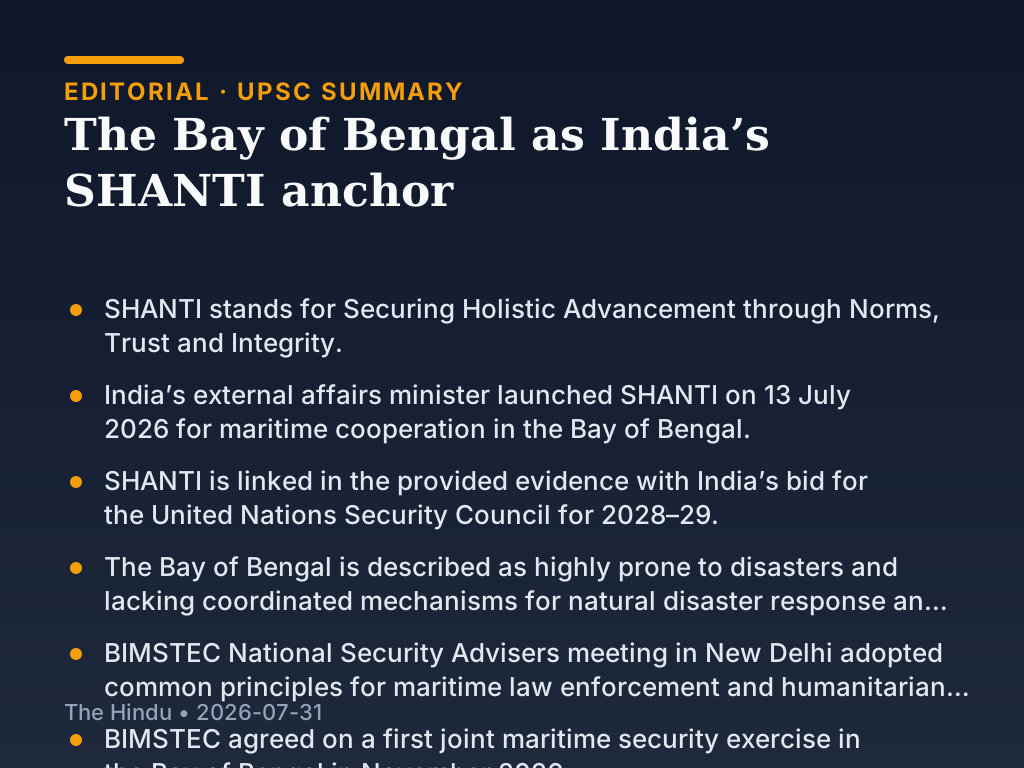
India’s external affairs minister launched the SHANTI framework (Securing Holistic Advancement through Norms, Trust and Integrity) on 13 July 2026 to strengthen maritime cooperation in the Bay of Bengal. SHANTI is linked in the provided evidence with India’s bid for the United Nations Security Council for 2028–29. The key claim for UPSC answers is that the Bay of Bengal needs coordinated, long-term mechanisms that address natural disasters and non-traditional maritime threats, not only bilateral aid or naval presence.
What happened: SHANTI launch and stated purpose
India’s external affairs minister launched SHANTI on 13 July 2026. SHANTI is presented as a norms-based approach for shared maritime spaces in the Bay of Bengal, anchored in norms, trust and integrity. SHANTI is positioned as a response to fragmentation in regional coordination for disaster response and for non-traditional maritime risks.
Background and earlier position: Bay of Bengal risks and coordination gaps
The Bay of Bengal is described as highly prone to disasters, with inadequate coordination mechanisms for collective response. The risk coverage includes natural hazards and non-traditional threats: climate-induced disasters, illegal fishing, cyber vulnerabilities, and supply-chain disruptions.
SHANTI is linked with earlier India-related maritime cooperation frameworks named in the provided evidence: SAGAR and MAHASAGAR. The framing is that SHANTI evolves from protecting maritime spaces towards governing shared maritime commons and building resilience over time.
Related current affairs
- The sea has a seat at the table
- Launch of fisheries infrastructure projects under PMMSY and seaweed capacity building conclave in Puducherry (Rs 36.49 crore)
- 7th High-Level Meeting between Indian Coast Guard and Vietnam Coast Guard held in Chennai
- India and Seychelles hold high-level bilateral meeting to strengthen cooperation in fisheries, aquaculture and the Blue Economy
- Eyes on the seas
- Unimpeded trade needs IPMDA as the answer