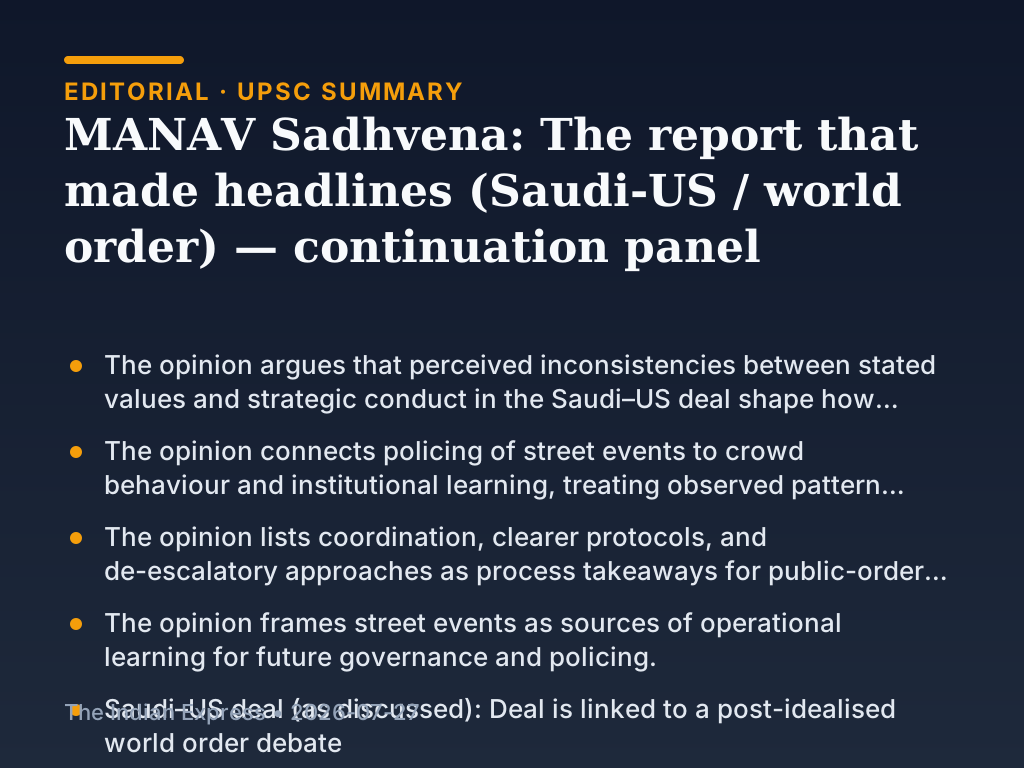
What the opinion argues about the Saudi–US deal
The note captures an opinion that the Saudi–US deal signals perceived inconsistencies between stated values and strategic conduct. The opinion links these contradictions to how states negotiate security and influence in a “post-idealised” world order — a world where ideal goals alone do not drive alliances and bargaining. In simple terms, the opinion expects policymakers to read deals not only for stated principles, but also for real strategic behaviour, because that reading changes bargaining outcomes and risk calculations.
What the opinion connects it to: policing, crowd behaviour, and institutional learning
The opinion also connects a public-order policing discussion (a Jantar Mantar context is referenced) to crowd behaviour and learning inside policing institutions. The central claim is that street events generate operational patterns that can be converted into process improvements, instead of treating each event as isolated.
The opinion summarises observed patterns in public-order situations and translates them into process takeaways. These takeaways include: improving coordination across agencies, adopting clearer on-ground protocols, and using de-escalatory approaches to reduce the chance of escalation during crowd interactions. The opinion frames street events as “sources of operational learning” — meaning the administration should capture what worked and what failed, and then adjust procedures.