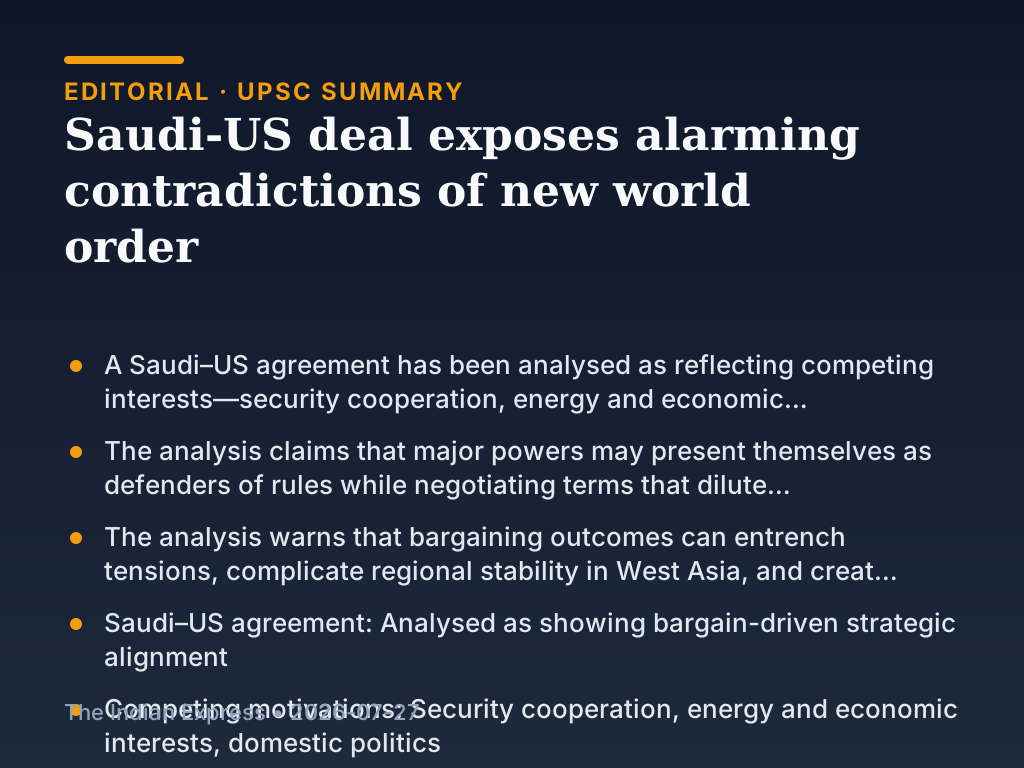
What happened: a Saudi–US agreement seen through strategic bargaining incentives
A Saudi–US agreement has been analysed as reflecting tensions in the emerging global order. The analysis argues that strategic partnerships can be driven by competing interests—security cooperation, energy and economic calculations, and domestic political priorities—rather than by a steady commitment to international norms.
Background and earlier position: “rules” claims versus practical bargaining
The analysis ties the Saudi–US agreement to a broader pattern in international relations: major powers may publicly describe themselves as defenders of rules but negotiate terms that dilute rule-consistent behaviour when it suits their interests. In this framing, credibility of international norms can weaken when application becomes selective.
What changed now: regional stability and accountability may be affected by transactional deals
The analysis raises concerns that bargaining outcomes shaped by narrow calculations can entrench tensions. It also argues that such bargains can complicate regional stability in West Asia and create incentives for uneven accountability, because different actors may face different expectations and costs.
Related current affairs
- MANAV Sadhvena: The report that made headlines (Saudi-US / world order) — continuation panel
- What is the Saudi-U.S. nuclear deal about? Why does Saudi Arabia want a nuclear programme? Why has President Trump linked the deal to the Abraham Accords? How does the agreement impact Iran’s nuclear programme?
- U.S. announces civilian nuclear agreement with Saudi Arabia
- Saudis reach deal with US that could let them enrich uranium
- IN BRIEF: U.S. to re-evaluate J&K travel advisory: envoy (‘Key part of India’)
- Yemen: Houthi rebels claim attack on Saudi military vessel in Red Sea