What happened
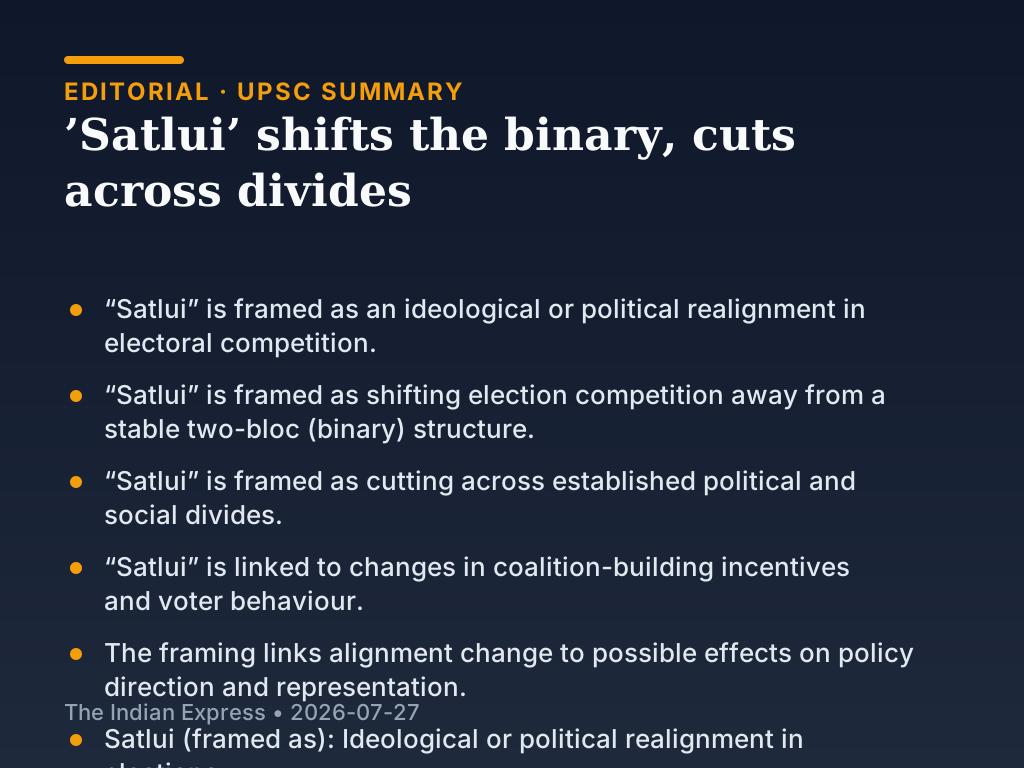
The label “Satlui” is used to describe an ideological or political realignment that changes how voters and political parties align with each other. The central claim is that “Satlui” shifts political competition away from a stable two-bloc (binary) structure and instead cuts across established political and social divides.
Background and earlier position
In many election analyses, political competition is interpreted through a binary lens: two rival poles structure voter choice and party strategy. In a stable binary, older social and political divisions often map neatly onto the two poles, so voter behaviour and coalition-building can appear more predictable.
What changed now (as framed around “Satlui”)
“Satlui” is presented as weakening the prevailing binary. The described consequences are cross-cutting realignment and altered incentives for parties. When voters do not remain locked into the same two blocs, parties may adjust alliance choices and campaign messaging to match the new alignment patterns.
Related current affairs
- Regional parties, hurdles
- EXPLAINED: The JDU’s request to consider liquor ban—how it connects to constituencies and lawmaking
- Counting best bets: Congress presses for early talks with Samajwadi Party
- 3 NCPI lawmakers skip NDA meet in Delhi, refuse to join BJP-led alliance
- Neither government nor Opposition can loom large in the election decision
- राजगठबंधन: रविवार को हराणे? (कवर थीम/स्लोगन)