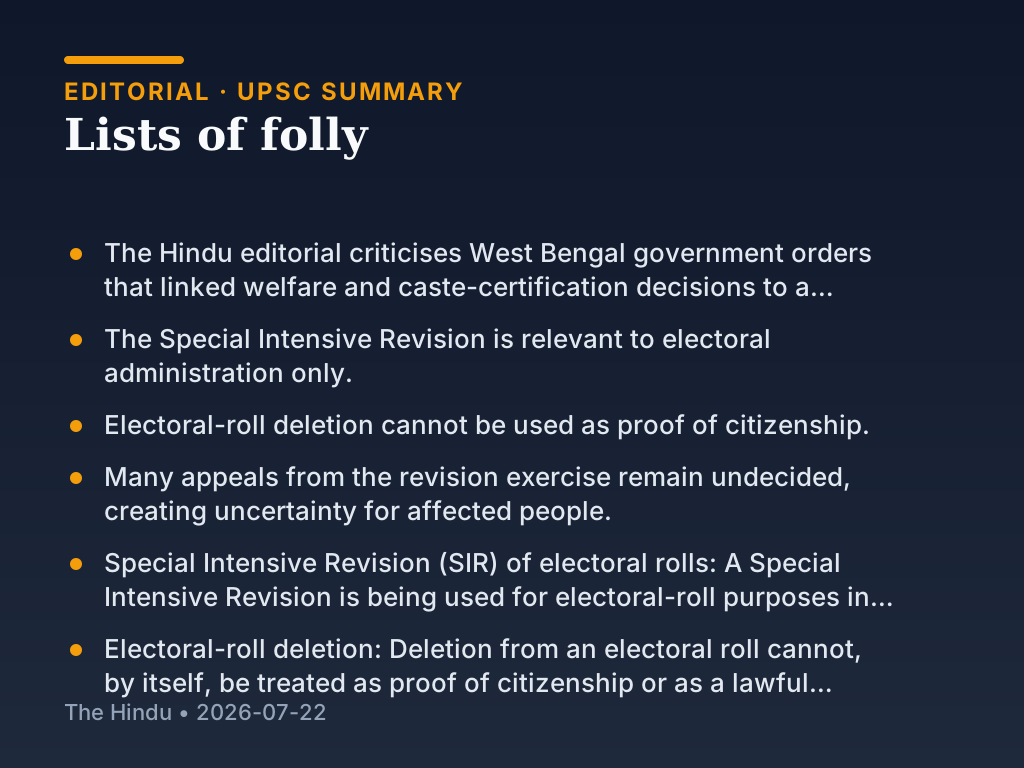
West Bengal government orders linked welfare benefits and caste-certification decisions to the outcome of a Special Intensive Revision (SIR) of electoral rolls. The Hindu editorial argues that the purpose of an electoral-roll revision is limited to election administration, and that deletion from a voter list cannot become a shortcut for deciding citizenship or withdrawing welfare support.
The Hindu editorial's central concern is legal and administrative overreach. It warns that using the outcome of an electoral-roll exercise to affect food support or other civic entitlements is inconsistent with basic rights, due process, and common sense.
The Hindu editorial also notes that many appeals remain undecided, which leaves a large number of people in uncertainty. In that situation, converting an electoral-roll outcome into a basis for exclusion would intensify arbitrariness and hardship.
Why the issue matters for UPSC
The subject sits squarely within GS2 because it connects electoral administration, governance, and welfare-state obligations. It also tests a candidate's understanding of the legal limits on administrative inference: voter-roll status and citizenship status are not identical, and entitlement to welfare benefits cannot be withdrawn without a lawful basis and fair procedure.
Background and earlier position
Related current affairs
- The Supreme Court reiterates electoral-roll exclusion cannot have non-voting consequences
- SC opposes use of SIR data for non-poll tasks
- Over 47 lakh voters flagged for possible deletion in Karnataka SIR
- Voters flummoxed by ‘logical discrepancies’ during Karnataka SIR
- Phase-3: Over 84,000 deleted for 'other' reasons in two states, one UT