What happened: allegations about bulk voter-deletion filings during ECI’s SIR
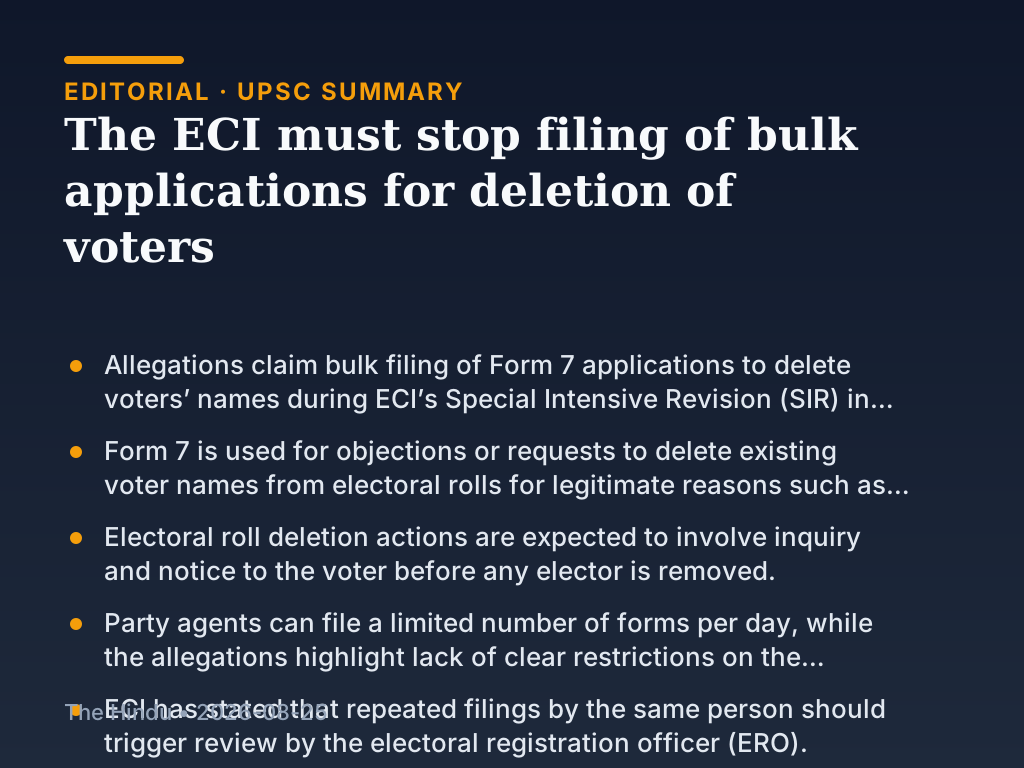
The Election Commission of India (ECI) has faced allegations that, during electoral roll revision under Special Intensive Revision (SIR), Form 7 applications were filed in bulk to delete voters’ names in Rajasthan, Gujarat, and Uttar Pradesh, with later concern raised for Uttarakhand. The core allegation is that bulk filing practices can weaken voters’ ability to learn about the deletion request and contest it in time.
Form 7’s legitimate purpose: objections for valid reasons
Form 7 is used for objections or requests to delete existing names from electoral rolls for legitimate reasons such as death, shifting, or ineligibility. Deleting an elector’s name requires a fair administrative process rather than removal by routine paperwork.
Due-process expectation: inquiry and notice to the voter
Before an elector is removed from the electoral roll, election officials are expected to conduct an inquiry and provide notice to the voter. Notice matters because it allows the voter to respond and enables officials to verify whether the deletion request is justified.
Related current affairs
- Cong. alleges bulk voter purge bid in Uttarakhand
- ECI conducts Special Intensive Revision (SIR) of electoral rolls in phases with safeguards to protect eligible voters
- Deletions in recent SIRs suggest arbitrary application of reasons (Telangana and Karnataka draft electoral rolls)
- Hyderabad, adjoining ACs drive Telangana’s record SIR deletions
- Invisible actors
- What did Trump say about India’s voting system? (U.S. election rules vs India; SAVE America Act)