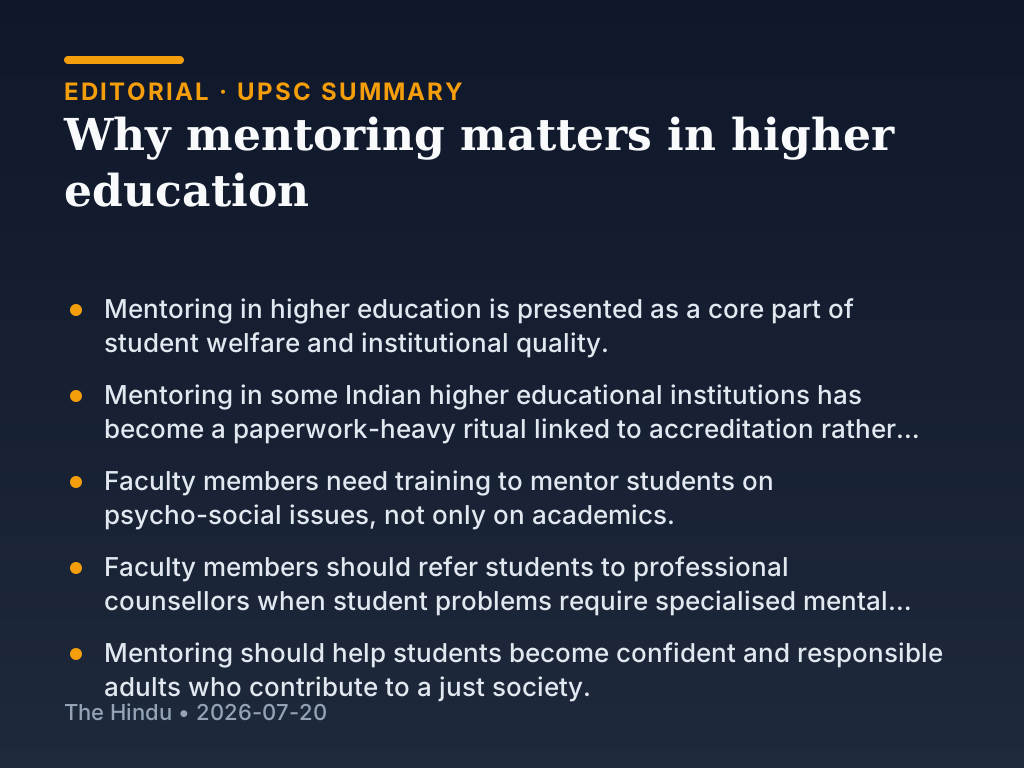
Mentoring in higher education is presented as a core part of student welfare, not a ceremonial add-on. A. Joseph Dorairaj argues that mentors can shape academic choices, emotional confidence, and responsible adulthood, which makes mentoring relevant to both institutional governance and social development.
Indian higher educational institutions already expect faculty members to counsel students and help them manage academic and non-academic concerns. The same institutional duty has too often become a paperwork-based ritual designed to satisfy accreditation requirements rather than a genuine support system for students.
What a good mentor is expected to do
Constraints in higher educational institutions
Related current affairs
- Mentoring should be more than a ritual
- KGMU to serve tofu, paneer in mess to meet protein goals after non-vegetarian food ban
- Vacant seats (letter to the editor)
- Research capital: ‘Taxing frivolous industries will not find success’ — Indian academia to face change
- Indian academia’s ‘research capital’ call: ‘Tāying (Taxis?) will suffice / Tang aviation?’ (headline partially legible)
- Vice President C. P. Radhakrishnan graces SASTRA Deemed University’s Ruby and Silver Jubilee valedictory celebrations; launches six new schemes