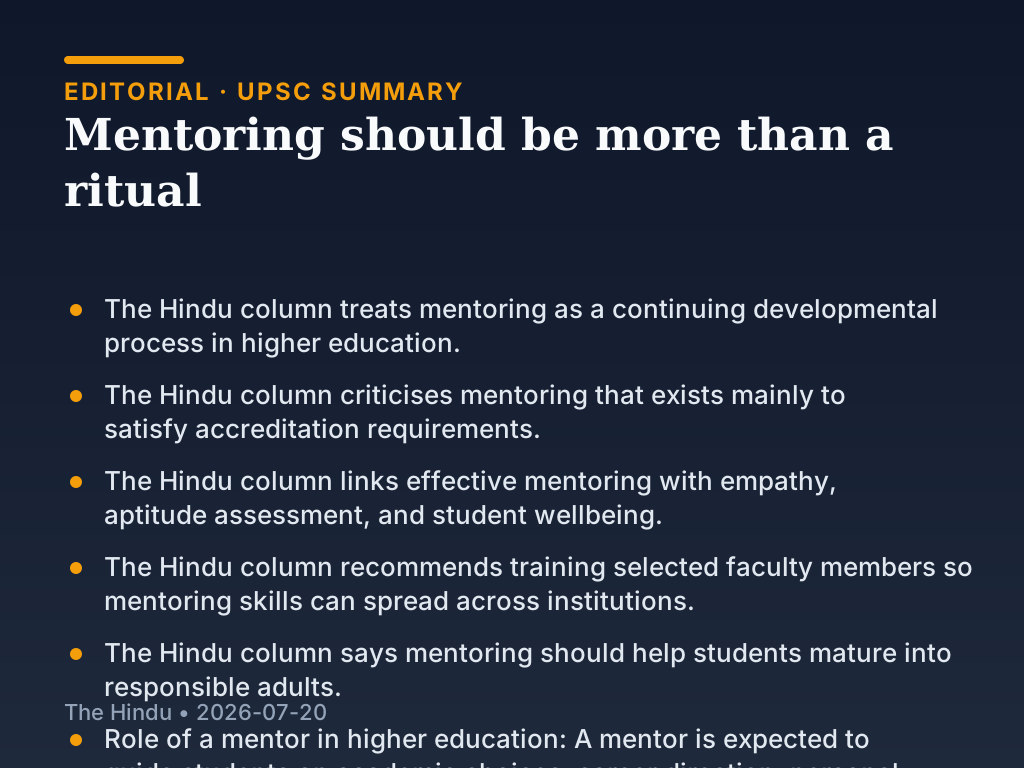
Mentoring in higher education is presented as a substantive part of student development, not as a paperwork-driven formality. The Hindu column argues that colleges and universities should treat faculty mentoring as a continuing institutional responsibility because mentors can shape academic choices, career direction, and student resilience.
Indian higher education institutions already expect teachers to counsel students, but practice often remains weak because of limited training, limited time, and large class sizes. The result is a gap between institutional expectations and the quality of student support.
Related current affairs
- Why mentoring matters in higher education
- Vacant seats (letter to the editor)
- Research capital: ‘Taxing frivolous industries will not find success’ — Indian academia to face change
- Indian academia’s ‘research capital’ call: ‘Tāying (Taxis?) will suffice / Tang aviation?’ (headline partially legible)
- Vice President C. P. Radhakrishnan graces SASTRA Deemed University’s Ruby and Silver Jubilee valedictory celebrations; launches six new schemes
- Parliament Questions: Access to Higher Education under National Digital University Initiative