What happened
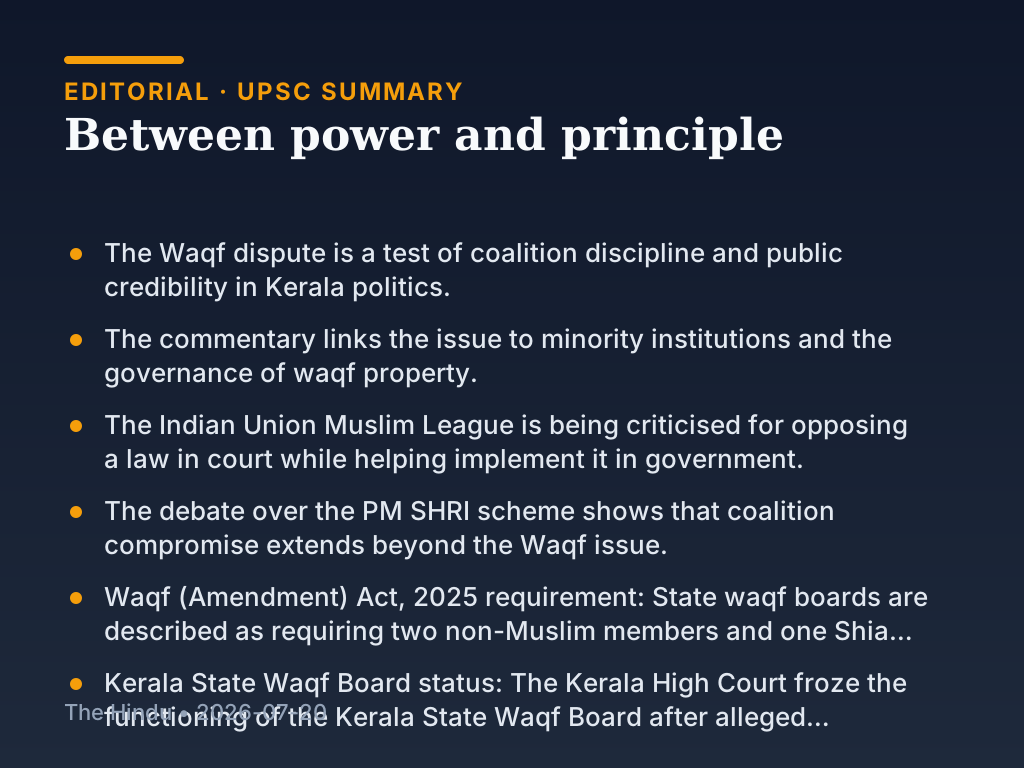
The Kerala High Court has frozen the functioning of the Kerala State Waqf Board after alleged non-compliance with the Waqf (Amendment) Act, 2025. The commentary says the decision has created a political dilemma for the Indian Union Muslim League (IUML), because the party remains a petitioner in the Supreme Court challenge to the law while the United Democratic Front (UDF) government in Kerala says it will reconstitute the board under the same legal framework.
Background and earlier position
The commentary presents the IUML as a party that has built support around defending Muslim institutions and community-linked principles. The Waqf dispute matters politically because it tests whether the party can preserve that image while participating in government decisions that may conflict with its public stance.
The Waqf (Amendment) Act, 2025 is described as requiring state waqf boards to include two non-Muslim members and one Shia Muslim member. The commentary says the existing Kerala board allegedly did not satisfy these requirements, which triggered the legal and administrative dispute.
What changed now
Related current affairs
- IUML tells its Ministers to be cautious about policies
- LDF govt. had agreed to pick non-Muslim members for Waqf Board, says Kerala CM
- SC frees Kerala Waqf Board from State govt. supervision
- Supreme Court statement says allegations against sitting judge must follow institutional mechanism
- Kerala HC issues norms for detention before formal arrest
- SC notice to Jharkhand on plea on exam irregularities