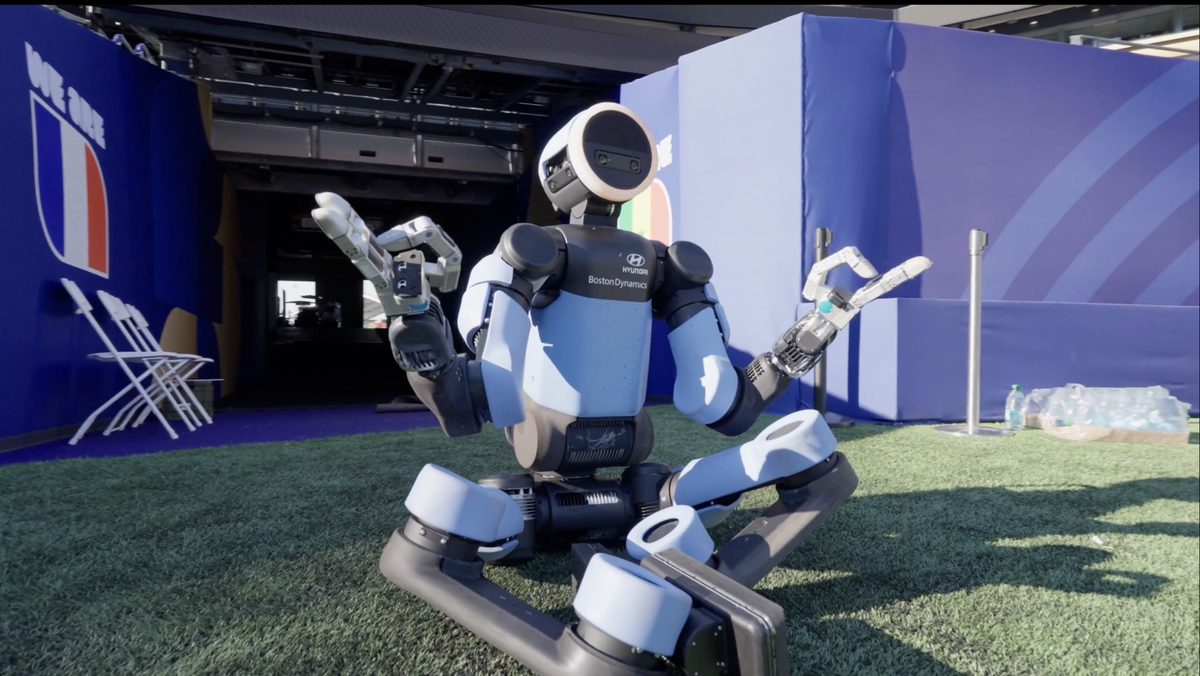
Boston Dynamics and Google DeepMind have upgraded the quadruped robot Spot with an AI control layer called Gemini Robotics-ER 1.6, integrated into Boston Dynamics’ Orbit inspection platform. The development matters because it shifts the discussion from robots that follow scripted routines to robots that can better understand, adapt, and act in complex industrial settings.
What embodied AI means
The discussion contrasts embodied AI with the common but incomplete idea that embodied AI simply means putting artificial intelligence into a robot body. The stronger argument associated with researchers such as Rolf Pfeifer and Josh Bongard is that body structure itself influences thinking and action.
The discussion also recalls Rodney Brooks, whose robotics approach emphasised simple reflex-like layers tightly coupled to sensors and motors instead of heavy dependence on internal world models.
Why the body matters in robotics
A central idea is morphological computation, which means that some control and computation can be offloaded to the mechanics of the body itself.
Related current affairs
- Jitin Prasada holds bilateral meetings in Morocco on trade, investment and digital transformation
- What changes when AI moves from reading viral genomes to designing them?
- Google’s AI advantage faces its biggest test yet
- AI speech recognition model trained on 65 Indian languages and dialects released
- Parliament Question: Government schemes and missions for Artificial Intelligence, Research and Innovation
- TDB-DST supports Griva Healthcare for commercialization of indigenous AI-powered cervical cancer screening technology (GrivaVision)