What happened: dissent framed as lawful civic opposition
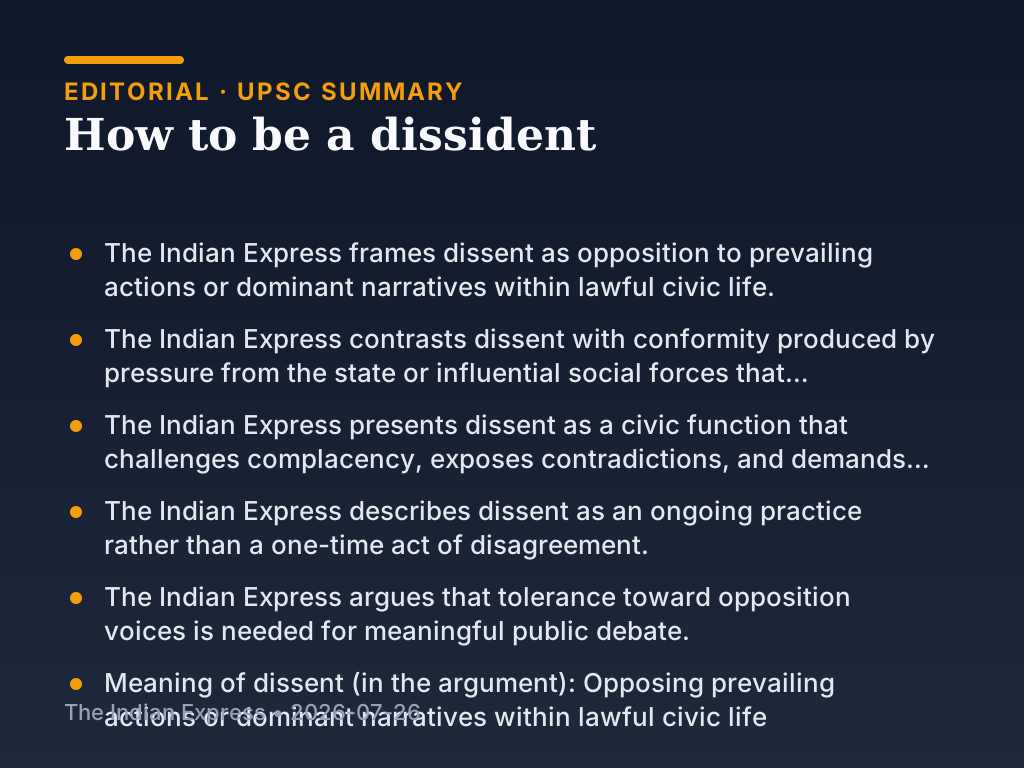
The Indian Express frames dissent as opposition to prevailing actions, policies, or dominant public narratives while remaining inside lawful civic life. Dissent is presented as disagreement that does not abandon civic rules and lawful behaviour.
The Indian Express contrasts dissent with pressure-based conformity. Pressure is described as coming from the state or from influential social forces that discourage disagreement.
Background and earlier position: dissent versus pressure to conform
The Indian Express treats dissent as a civic function rather than disruptive defiance. Dissent is described as challenging complacency, exposing contradictions, and demanding accountability from authorities and institutions.
What changed now: dissent described as an ongoing practice and a tolerance ethic
Related current affairs
- Shouldn’t there be a law of dissent? (or similar op-ed/column heading)
- Courts must speak language of rule of law, economics: CJI
- From Mohan Bhagwat, a lesson on dissent and democracy
- A strategic partnership faces an ethical qu estion
- What the C T A (or university “system”) says about ethics and the age of laws (byline not fully legible)
- The immunity of being Biji Bhushan Singh