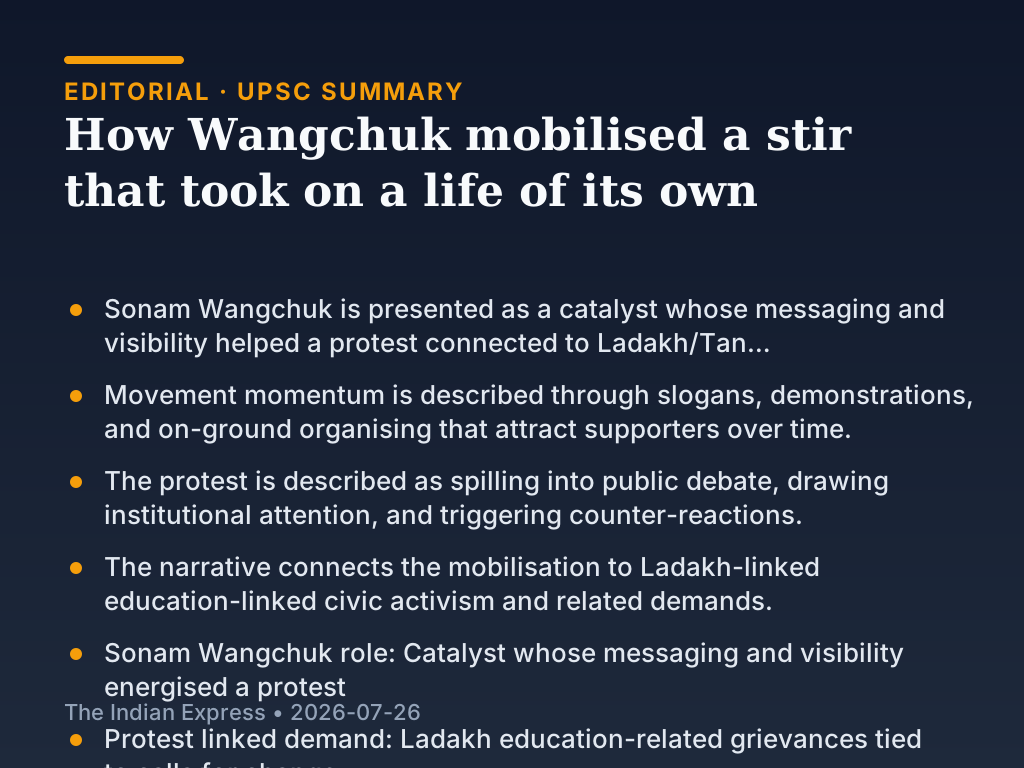
What happened: Sonam Wangchuk’s mobilisation helped a local protest expand into a wider public debate
Sonam Wangchuk is described as a catalyst whose actions and public visibility helped a protest linked to Ladakh/Tan education-linked demands grow beyond its initial trigger. The mobilisation is shown as building momentum through slogans, demonstrations, and on-ground organisation, which attracted supporters over time.
As the protest expanded, it began to shape public debate, draw institutional attention, and produce counter-reactions from other actors in the political and social space. The narrative emphasises how movement momentum can grow after the original grievance and how the movement can develop its own public political life.
Background and earlier position: civic agitation around Ladakh/Tan education and related demands
The account situates the mobilisation in the broader context of Ladakh-linked demand for change in education and related civic movements. Sonam Wangchuk is consistently associated with catalysing activism around these education-linked concerns, with an initial trigger that later expanded into a wider mobilisation.
What changed now: the protest created spillover into wider debate and competing reactions
Related current affairs
- Wangchuk opens a window for talks as Centre steps up efforts to resolve crisis
- Hunger strike day 21: Police shift Wangchuk to hospital
- Khera visits Wangchuk, slams Centre on Ladakh issue
- How Sonam Wangchuk's father broke his 1984 fast after Indira met him
- Day 19 of Sonam Wangchuk hunger strike
- Government must talk to Sonam Wangchuk, that is its duty