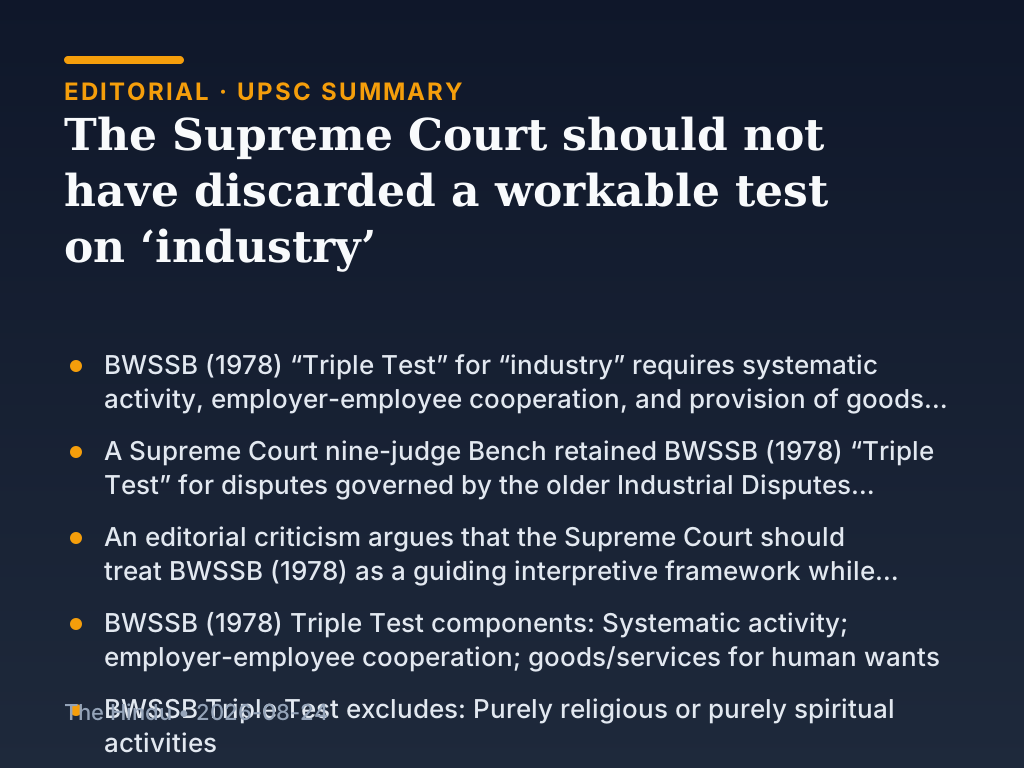
What happened: Supreme Court retained BWSSB (1978)’s “Triple Test” for older Industrial Disputes matters, but did not treat it as a guiding framework for IRC Section 2(p) interpretation of “industry”
A Supreme Court nine-judge Bench addressed the meaning of “industry” under labour-law frameworks. The Supreme Court retained the BWSSB (1978) “Triple Test” for disputes governed by the older Industrial Disputes framework, including pending disputes under the older position.
Background and earlier position: BWSSB (1978) “Triple Test” for “industry” under the Industrial Disputes framework
In BWSSB (1978), the Supreme Court formulated a “Triple Test” to decide whether an activity qualifies as “industry” for labour-law purposes under the Industrial Disputes framework. The “Triple Test” requires three connected elements: systematic activity, employer-employee cooperation, and provision of goods or services to satisfy human wants beyond purely religious or spiritual functions.
Systematic activity means organised work rather than occasional or casual activity.
Related current affairs
- SC says 1978 ‘industry’ definition rendered void
- The top court’s treatment of BWSSB highlights the enduring anxiety over the scope of labour protection
- How the SC ruling redefined ‘industry’
- THE GIST (SC ruling on ‘industry’)
- Justice Nagarathna differs, backs broad industry definition
- 1978 ‘industry’ definition void under new code: SC