What happened: Supreme Court treatment of the BWSSB (1978) “industry” reference
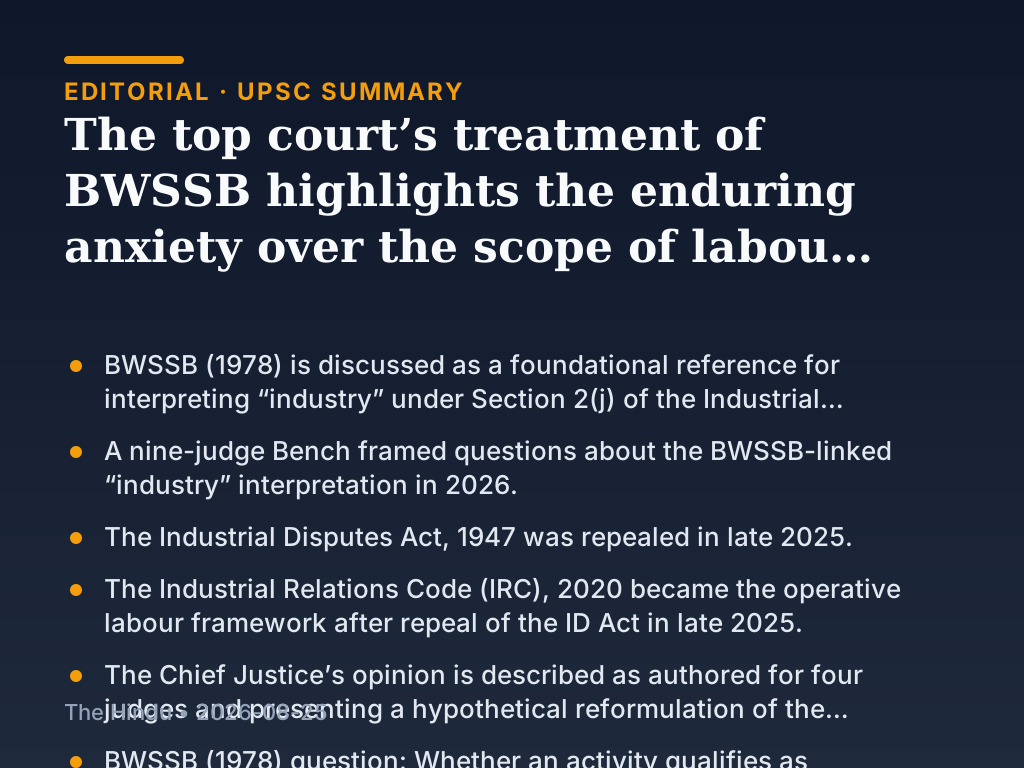
The Supreme Court’s BWSSB-linked discussion focuses on when an activity qualifies as “industry” under Section 2(j) of the Industrial Disputes Act, 1947. The meaning of “industry” works as a coverage gateway: once an activity is treated as “industry,” workers can access the ID Act’s labour dispute adjudication framework and related labour protections.
Background and earlier position: why the “industry” threshold mattered
The BWSSB-linked “industry” threshold matters because it decides which workplaces fall within the ID Act’s scope for labour dispute settlement. The debate also connects the “industry” coverage to constitutional social-justice goals for labour protection, while noting bargaining-power imbalance between workers and employers can persist as workplace forms change.
What changed now: repeal of the ID Act and the Industrial Relations Code, 2020
The Industrial Disputes Act, 1947 was repealed in late 2025. After the repeal, the Industrial Relations Code (IRC), 2020 became the operative labour-code framework. Because future labour disputes are expected to be decided under the IRC, the BWSSB-linked reference under the old Section 2(j) structure is described as effectively moot for future case outcomes.
Related current affairs
- Labour rights beyond the shadow of BWSSB (V. Gopala Gowda)
- The Supreme Court should not have discarded a workable test on ‘industry’
- Justice Nagarathna differs, backs broad industry definition
- How the SC ruling redefined ‘industry’
- Trade unions sound the alarm over Supreme Court judgment on the definition of industry
- Cong. flags concerns over SC’s ruling on ‘industry’ definition