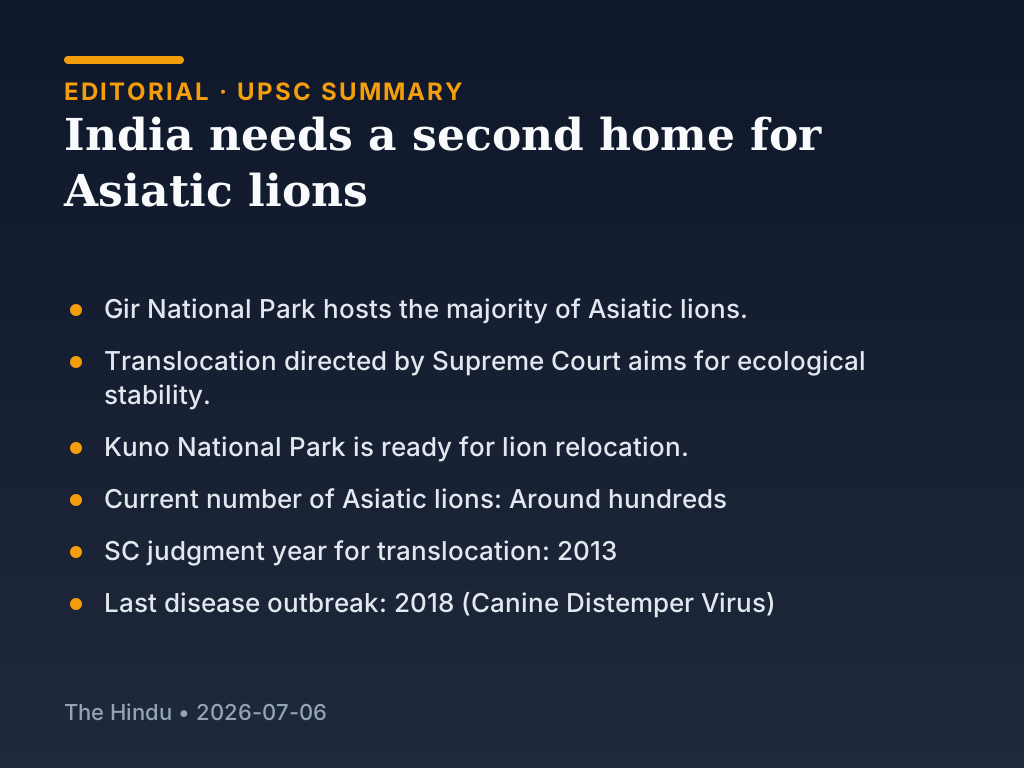
The piece argues that India’s conservation success in increasing the Asiatic lion population—now around the high hundreds—has not translated into true long-term security. It points out that the lions remain concentrated in a single main landscape (Gir), which makes the species highly vulnerable to extinction from any one catastrophic event such as disease outbreaks, epidemics, forest fires, droughts, or sudden declines in prey.
It traces the rationale for dispersal to research and wildlife science that repeatedly recommends a “metapopulation” strategy: maintaining more than one geographically separated population so that risk is spread and a single event cannot wipe out the entire species. The article cites the Supreme Court’s 2013 judgment as a key legal turning point, which directed translocation of lions from Gir in Gujarat to Kuno National Park in Madhya Pradesh, explicitly reasoning that conservation should follow ecological principles and that a second population is essential.
However, the author says implementation has been delayed for more than a decade. Gujarat, the article notes, has resisted relocation outside the state, citing both its record of conservation and concerns about habitat suitability elsewhere. This has resulted in an impasse between scientific recommendations, court directions, and state-level political considerations. The piece also emphasizes that Kuno has reportedly been prepared for the relocation (including habitat and village adjustments), yet no lions have been introduced.
Related current affairs
- NMPB scheme for conservation, development and sustainable management of medicinal plants
- Promotion of medicinal plants under NMPB
- In a first, Maharashtra plans DELTA Act to unlock tourism growth through ghugrokhchain conservation
- Coastal lions mainly depend on wild prey, not domestic animals
- The opportunity and policy dilemma around understanding the world’s megafauna through monitoring data
- Prime Minister visits UNESCO World Heritage Prambanan Temple Complex; plaque unveils ASI conservation project